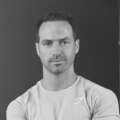
Dr Dominik Nischwitz is a German dentist based in Tübingen. He founded the Biodentistry Global Standard, a certification and training programme for what he calls biological dentistry 3.0, and he is among the most widely known international advocates of ceramic dental implants and of treating the mouth as an upstream factor in whole-body health.
His work spans three areas with different levels of evidence behind them: ceramic implants, which have clinical guideline recognition; the mouth-body framework, parts of which are mainstream and parts of which are not; and jawbone cavitation surgery, which professional bodies have not endorsed. What follows sets out what he does and what the published evidence says about each.
Fact box
| Full name | Dr Dominik Nischwitz |
| Known as | Dr Dome |
| Nationality | German |
| Based | Tübingen, Germany |
| Trained | Dentistry in Germany, 2003–2008; further qualifications in functional and naturopathic medicine, 2012 |
| Clinic | DNA Aesthetics, Tübingen |
| Founded | Biodentistry Global Standard (BGS) |
| Known for | Ceramic implants; the biological dentistry 3.0 framework; cavitation surgery |
| Mentors | Ulrich Volz (ceramic implantology); Dietrich Klinghardt (integrative medicine) |
| Notable patient | Peter Diamandis, according to Nischwitz’s own account |
What is Dr Dominik Nischwitz known for?
Three main things. Ceramic implants. He has placed them for roughly fifteen years, learning under Ulrich Volz, who pioneered the technique, and puts his own case volume above five thousand. Zirconia implants are recognised in clinical guidelines: the International Team for Implantology’s 2023 consensus puts five-year survival at 97.2%, comparable to titanium, and Germany has had an S3 guideline covering ceramic implants since October 2022. The guideline sets specific terms: one-piece zirconia is recommended as a therapeutic alternative, two-piece systems only under study conditions or after detailed patient consent, and its stated rationale is material behaviour and aesthetics rather than any claim about systemic health.
The mouth-body framework. He argues that previous dental work — metals, root-canal-treated teeth, unhealed extraction sites — can act as an upstream load on the immune and nervous systems, and that this is routinely missed by both dentists and doctors. Parts of this are mainstream and parts are not, and we have set out where the line falls in our guide to what biological dentistry is.
Cavitation surgery. He operates on unhealed jawbone at former extraction sites. Professional bodies have not endorsed the procedure: the American Association of Endodontists will not condone surgical intervention for suspected lesions of this kind, and Aetna classifies the procedure and its adjuncts as experimental, investigational or unproven.
Research on the underlying condition has developed recently, largely through one collaboration. Professor Shahram Ghanaati, deputy director of oral and maxillofacial surgery at Goethe University Frankfurt, has published a series of papers with Johann Lechner, the Munich clinician who has documented the condition for four decades. A molecular study published in May 2025 used real-time PCR to compare affected jawbone against healthy controls and found a different gene expression pattern, with CCL5/RANTES, VEGF and IGF upregulated and collagen types I, II and IV downregulated. The authors are explicit that the sample was three cases against three controls, that age, sex and comorbidities were not accounted for, and that the findings need replication.
A scoping review published in 2025 by a conventional academic group in Poland treats the condition as a real entity characterised by silent inflammation, highlights the same CCL5/RANTES marker, and recommends advanced imaging together with surgical intervention. The largest systematic review to date screened 4,051 articles and included 29. It reported pain remission after surgical curettage ranging from 66% to 100%, with up to a third of patients showing minimal improvement or recurrence, found that no gold-standard diagnostic method could be identified, and noted that all included studies were observational with a high risk of bias. Its authors called for prospective trials.
What is the Biodentistry Global Standard?
A training and certification programme Nischwitz founded to set a standard for biological dentistry, run through the Institute of Biological Dentistry. His stated reason for creating it is unusually blunt about his own field. Biological dentistry has no protected title and no defined scope, which means, in his words, that “because there is no standard, it means nothing really.”
He is equally direct about the practitioners it attracts. He describes seeing patients arrive from other biological and holistic dentists with unfinished and technically poor work, says he understands why high-skill conventional dentists are put off by the label, and characterises some of what is done under it as a cover for a lack of technical ability. He also frames the programme as an attempt to make himself unnecessary: “I systemise everything with the main goal of making me obsolete.”
BGS certifies practitioners, runs a directory of them and sells the training. Nischwitz defines the standard, teaches it and certifies against it.
What are Dr Dominik Nischwitz’s qualifications?
He studied dentistry in Germany between 2003 and 2008 — his father is also a dentist — and took further qualifications in functional and naturopathic medicine in 2012. He trained in oral surgery after university under one of Germany’s leading titanium implantologists before moving to ceramics under Ulrich Volz. He has said his own health problems in his twenties are what pushed him from technical dentistry toward whole-body treatment, and he began teaching at around thirty. He practises at DNA Aesthetics in Tübingen and has written several books.
He dates the turn to a visit to Dietrich Klinghardt in Austria in 2010, when he was unsure whether a dentist had any business working on systemic health at all. “I said, Dr Klinghardt, I’m just a dentist. Am I even allowed to do this? And he said, son, you have the moral obligation to do so.” He has used the phrase about his own work ever since.
What has he written and where has he spoken?
His book It’s All in Your Mouth: Biological Dentistry and the Surprising Impact of Oral Health on Whole Body Wellness is published in English by Chelsea Green, with an audiobook edition. He also teaches an online curriculum through the Institute of Biological Dentistry, which he describes as a software update for the profession.
He has appeared across both the health and the dental trade press. Notably for someone working outside the mainstream of his own profession, he has been interviewed on Dentistry Uncensored, one of the longest-running podcasts aimed at practising dentists. On the health side he has appeared on The Model Health Show, Ben Greenfield Life and Jim Kwik’s podcast, among others.
On the conference circuit he speaks to medical, longevity and dental audiences rather than only to his own field. He gave a lecture at the Buck Institute for Research on Aging in San Francisco in late 2025 and has spoken at the Life Summit in Berlin.
How has his work been received?
Within conventional dentistry, poorly for much of his career. His licence was challenged, dental academics wrote against him in the German professional press, and the campaign ran in his local newspaper for months. His account is that he offered to debate the substance and nobody took it up: “Just bring me someone who doesn’t attack me emotionally. If we discuss rationally and sceptically, I’m all for it. No one ever came to me. Never, ever, ever.” On the label he attracts, he says: “I’m already the biggest conspiracy theorist in the whole dental world.”
He is also more qualified about his own field’s claims than his critics generally allow. On root canal treatment, the procedure biological dentistry is most associated with opposing, his position is that most patients should do nothing: “If you have a root canal right now and you feel perfectly fine, then just leave it. No problem.” On when it is warranted: “You do not need a root canal unless you’re in massive pain or you had a traumatic accident. You should always question if someone tells you you need a root canal and you’re not in pain.” On the electromagnetic argument some in his field make, he accepts that no controlled study exists and that it cannot easily be demonstrated.
What does the research say about his central claim?
The most relevant work is being done by Professor Shahram Ghanaati at Goethe University Frankfurt, whom Nischwitz cites in support of his own position. Ghanaati’s group has published on what it calls covered socket residuum — not the “chronic socket residue” the term is sometimes given as — and its findings are more interesting than either camp’s summary.
A January 2025 radiological study of thirty-six patients found cavitations forming in most upper premolar extraction sites, which supports the claim that these are far commoner than dentistry assumes. Its title describes the process as programmed socket collapse, and the authors frame the result as a physiological outcome of healing rather than a disease.
A randomised trial published in November 2025, co-authored with Jerry Bouquot, who coined the original terminology in the 1980s, found that platelet-rich fibrin alone did not prevent the residue and recommended combining it with bone substitute material. Nischwitz’s position is that with the right systemic preparation no grafting material is needed, because the body is the real bone builder. The authors say further work is needed to establish the clinical significance of the residue.
Where can you read more?
Nischwitz publishes at drdomeofficial.com and through the Institute of Biological Dentistry. Our own explainer on what biological dentistry is and how it connects oral health to systemic disease sets out which of the claims in this field are supported and which are not, with the mainstream positions in full.