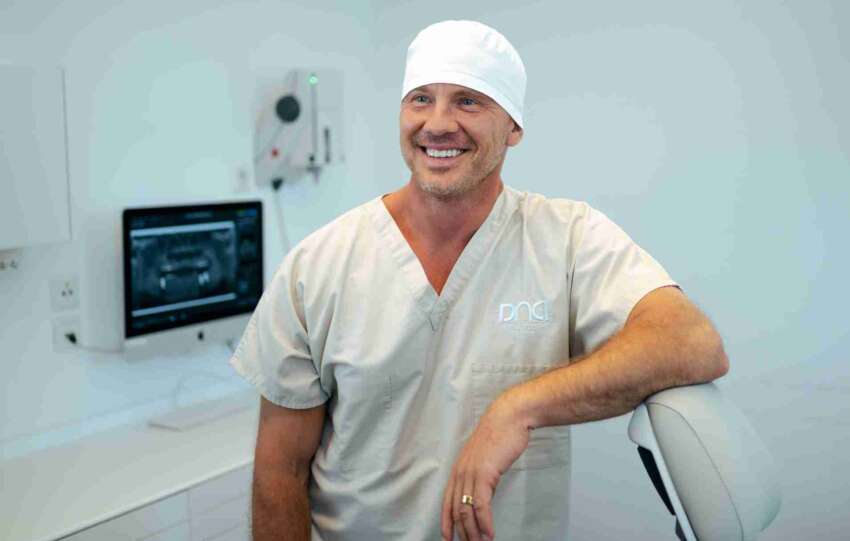
Dr Dominik Nischwitz is a German dentist based in Tübingen. He founded the Biodentistry Global Standard, a certification and training programme for what he calls biological dentistry 3.0, and he is among the most widely known international advocates of ceramic dental implants and of treating the mouth as an upstream factor in whole-body health.
His…
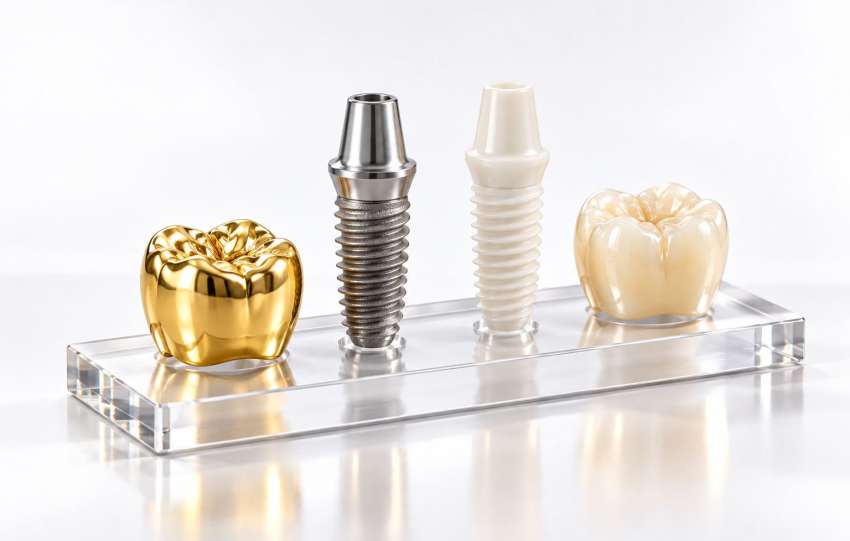
Biological dentistry covers treatments with varying levels of evidence behind them. Metal-free fillings are ordinary restorative dentistry. Ceramic implants have clinical guideline recognition. Cavitation surgery has no professional body endorsement, though the research on the underlying condition has moved recently. The table below sets each treatment against its conventional equivalent.
Treatment comparison
TreatmentConventional equivalentWhat the…
Biological dentistry treats the mouth as part of the whole body rather than a separate repair site. In practice that means metal-free restorations, protective protocols when removing existing metalwork, and treating chronic dental infection as a possible contributor to illness elsewhere in the body. Parts of the approach are now mainstream: the EU banned dental…
Root canals and autoimmune disease are often linked through theories of chronic inflammation and immune activation, but current scientific evidence does not establish a clear, direct causal relationship.
This is one of the most contested topics in modern dentistry.
Biological dentistry often treats root canal-treated teeth as potential contributors to systemic illness. Conventional dentistry, by…
Dental infections can contribute to chronic illness by acting as persistent sources of inflammation, immune activation, and microbial byproducts, although their impact varies depending on the individual, the severity of infection, and overall biological context.
This is one of the most important, and most misunderstood, questions in oral health.
At one extreme, the claim is…
A root canal is a dental procedure that removes infected or inflamed pulp from inside a tooth, disinfects the canal space, and seals it so the tooth can remain in place.
That is the standard definition. It explains what the procedure does mechanically. It does not settle the harder question, which is whether a root…