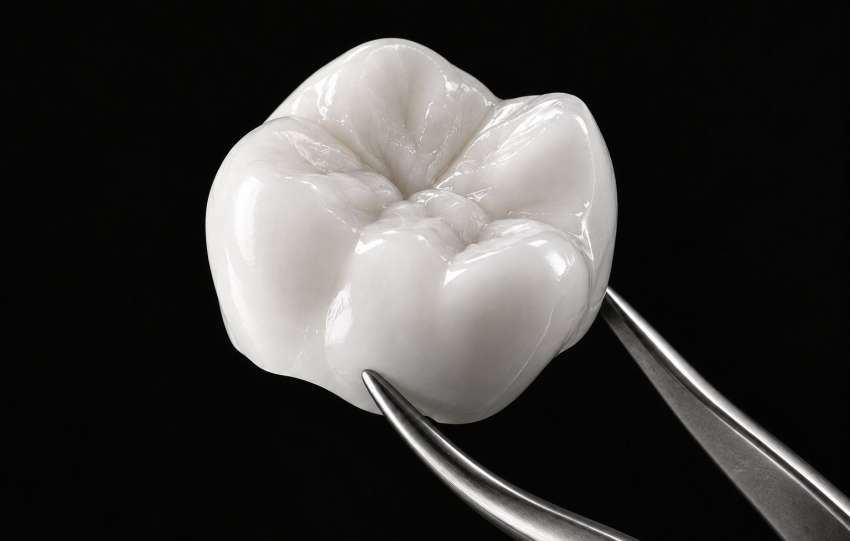
Biological dentistry’s argument about materials has largely been won. The EU banned dental amalgam from January 2025, and the Minamata Convention’s sixth conference agreed a global phase-out by 2034. Ceramic implants entered mainstream consensus in 2023, when the International Team for Implantology put their five-year survival at 97.2%, comparable to titanium. Practitioners treated as cranks…
More than an hour after stepping off the main stage at the Health Optimisation Summit in London, Dr Dominik Nischwitz is still talking. The questions that started at the side of the stage followed him up to the gallery balcony, after a steward on a health and safety mission moved everybody on. "I'm not leaving…
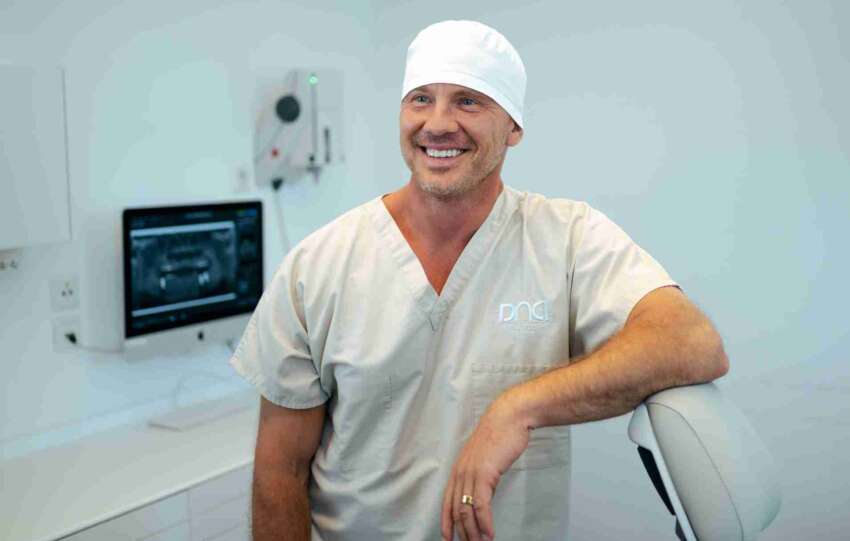
Dr Dominik Nischwitz is a German dentist based in Tübingen. He founded the Biodentistry Global Standard, a certification and training programme for what he calls biological dentistry 3.0, and he is among the most widely known international advocates of ceramic dental implants and of treating the mouth as an upstream factor in whole-body health.
His…
Biological dentistry covers treatments with varying levels of evidence behind them. Metal-free fillings are ordinary restorative dentistry. Ceramic implants have clinical guideline recognition. Cavitation surgery has no professional body endorsement, though the research on the underlying condition has moved recently. The table below sets each treatment against its conventional equivalent.
Treatment comparison
TreatmentConventional equivalentWhat the…
Hidden dental infections are chronic, low-grade infections in the teeth, surrounding tissues, or jawbone that often produce minimal local symptoms but may contribute to systemic inflammation and ongoing health issues.
They challenge one of the most deeply held assumptions in dentistry: that pain equals problem, and absence of pain equals health.
In many cases, that…