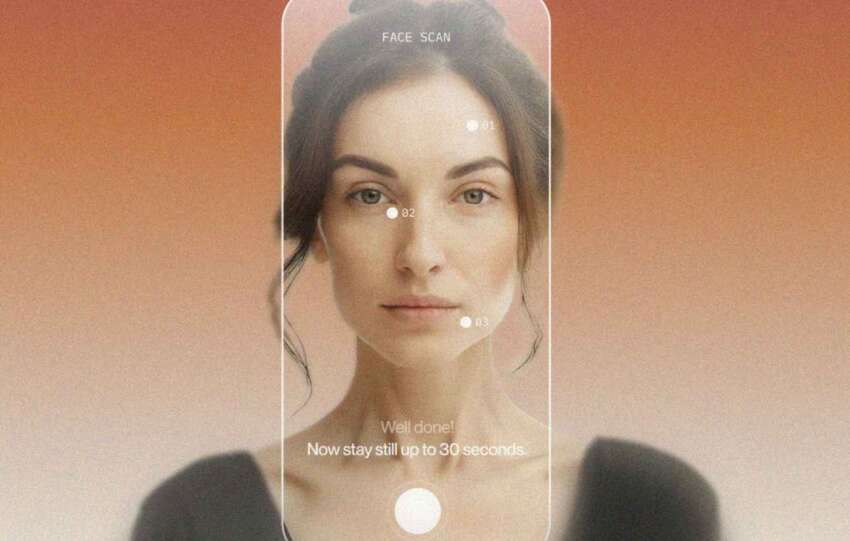
YOU(th) raised $4.5m in February. The number is unremarkable. The thinking behind the product is worth a closer look. In late February 2026, the German startup closed a $4.5m round led by Callisto Health, with caesar., adesso Ventures, Antler, Moonstone and 1024 Ventures alongside, plus angel cheques from Jean-Charles Samuelian (Alan, Mistral AI) and Patrick…
TECH
The AI-drug-discovery sector in 2026 has split into two camps. One camp wants to design new molecules from first principles. The other wants to make existing pharma R&D faster, cheaper and less likely to fail. The first camp gets the magazine covers. The second camp is closer to a working business.
Owkin sits firmly in…
Function Health has acquired Getlabs, a mobile healthcare platform that dispatches licensed professionals to collect blood samples at a patient’s home, office, or other location.
The integration introduces a new option for Function members: either visit one of more than 2,000 lab locations or schedule a home blood draw. The diagnostic process, lab panels, and…
Lume Health has secured fresh funding to advance a wrist-worn device designed to track cortisol and decode circadian health. According to reports, the company has now raised $2.5 million, built a waitlist of more than 5,200 people, and is using the capital to support pre-launch development and scientific validation.
That matters because Lume is targeting…
Perplexity AI is expanding into healthcare, positioning its AI-powered search platform as a tool for delivering real-time medical information and guidance.
The company has built its product around an answer engine that retrieves, synthesises and cites information in response to user queries. Applying that model to healthcare introduces a higher-stakes use case, where accuracy, transparency…
Microsoft has unveiled a new health-focused version of its Copilot system, signalling a major push into AI-powered personal health assistants.
The platform is designed to analyse and interpret multiple streams of health data, including medical records and data generated by wearable devices. By combining these datasets, the system aims to help users better understand their…
Sleep has quietly become one of the most valuable windows into human health.
Over the past decade, wearable devices and sensor platforms have made it possible to capture detailed physiological data while people sleep. What began as consumer sleep tracking has evolved into something far more significant: the development of predictive health AI systems that…
Wearable devices are evolving from passive health trackers into interactive computing platforms. One of the technologies driving this shift is gesture control — the ability for a device to interpret hand or finger movements as digital commands.
Gesture control wearables detect subtle muscle signals or motion patterns and translate them into inputs for digital systems…
Dr Mikael Mattsson, Phd Mikael Mattsson is CEO at exercise intelligence company svexa, which creates algorithms and software for decision support for sports teams, elite and recreational athletes, as well as hardware and software companies in the sports and health tech industries. He lives in Menlo Park, California. Follow him on Instagram. Visit svexa.com and…
The idea sounds outlandish at first: strap on a headset, run a faint electrical current through your skull, and feel your depression lift. Yet that’s exactly what Flow Neuroscience has built and, according to its data, it works.
Founded by two psychiatrists who grew frustrated by the limits of antidepressants, Flow began as an academic…