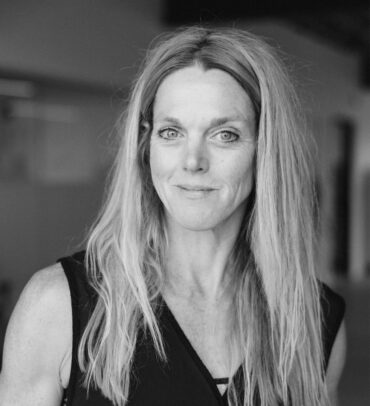
Dr Stacy Sims: Track your period to train smarter
Walk into a gym, ask the average personal trainer how a woman should adjust her training around her menstrual cycle, and the answer you’ll get — if you get one at all — is likely to be vague. Don’t push too hard if you’re feeling tired. Listen to your body. Maybe skip the heavy session if you’re cramping. The advice isn’t wrong, exactly. It’s just shallow, generic, and unhelpfully gendered as a kind of soft, intuitive thing rather than the precise, predictable physiological framework it actually is.
Dr Stacy Sims, the New Zealand-based exercise physiologist and nutrition scientist, has spent two decades arguing that women deserve better. Her case is that the menstrual cycle is one of the most reliable performance signals an active woman has access to — and that knowing how to read it transforms training in ways that gym-floor advice rarely captures.
In an extended interview with Unfiltered,part of our wider Sims interview series, Sims set out the practical framework: how the body’s response to training shifts predictably across the cycle, when to push hard and when to pull back, and why the answer to “should I exercise on my period?” is almost always yes — but with a more sophisticated set of qualifiers than mainstream fitness advice tends to offer.
How widely is cycle tracking used at the elite level?
From an elite level, there are many, many professional athletes who are tracking their cycle. This is what we want people to understand — that we don’t have enough data yet to make blanket generalised recommendations from sports science, but we do have really good case reports, anecdotal work, and case studies. And we have information from outside of sports science that we can pull in to look at how the body responds to stress and how it adapts across the menstrual cycle.
The argument that there’s “not enough research” on women is, to be honest, frustrating. Sports science has historically under-studied women, that’s true. But if you look outside sports science — into immunology, endocrinology, diabetic research, gynaecology — there’s a substantial body of robust evidence on how the female body responds to stress, how it metabolises carbohydrate across the cycle, how the immune system shifts after ovulation. We don’t need to start from scratch. We need to extrapolate intelligently from the data we already have.
Where should women start?
The very first thing is to track. Not training — just track. Over two or three cycles, learn how you respond and how you sleep across your own cycle. Because for all the general physiological patterns we can describe, individual variation is real. Are you someone who feels super flat around ovulation, or are you someone who feels bulletproof? Estrogen surges around ovulation, but what that surge feels like — energetic, capable, edgy, depleted — varies woman to woman.
Once you know your own pattern, you can really start to maximise your training within specific guidelines. You stop guessing and you start working with predictable signal.
What’s actually happening physiologically across the cycle?
The cycle has two halves and the body behaves very differently in each.
The first half is the follicular phase — the low hormone state from menstruation through to ovulation. This is when your immune system is most robust. You can access carbohydrate really well. You can push heavy, heavy loads and recover from them. The body has high stress-resilience and a strong ability to adapt to training stress. If you have the option to schedule your hardest sessions, this is the half of the cycle in which to do it.
After ovulation, the picture changes substantially. Estrogen and progesterone both rise. There’s a change in the immune system — a more pro-inflammatory state. There’s a metabolic shift where carbohydrate is being preferentially shuttled towards the endometrial lining rather than to working muscle. Muscle protein breakdown increases, because the body is trying to build tissue — specifically, a robust uterine lining in case implantation happens.
So your body is now fighting between two demands: training adaptation on the one hand, and creating a really robust endometrial lining on the other. That’s the physiological reality. It doesn’t mean you can’t train hard after ovulation. It means you should be cognisant of the fact that the body is allocating resources differently.
So can women still lift heavy after ovulation?
I’m not saying don’t do anything hard and heavy after ovulation. That’s an important distinction. The mistake people make is to read this kind of information and conclude that women shouldn’t push themselves for half their lives, which is obviously wrong.
What it means is: be cognisant of how your body is responding. If you’re someone who feels strong and capable after ovulation, train accordingly. If you’re someone who notices that intensity feels harder, recovery feels slower, and sleep feels worse in that phase, schedule your training to work with that.
The real benefit of tracking is the precision it gives you. You might find that on day 18 of your cycle you always feel like you’re getting a cold, you feel pretty flat, your usual paces feel harder than they should. You won’t notice that pattern if you’re not tracking. But once you can see it, you can plan around it. On day 18, schedule a recovery day. Don’t try to hit the intensities your training plan asked for. Don’t beat yourself up that the session didn’t go to plan. Your body is not really that capable of doing it on that day, and that’s information you can use.
Should women exercise on their period itself?
Yes — and this is where the popular framing of “should I exercise on my period?” actually gets the question backwards. Menstruation itself, the bleed, falls at the very start of the follicular phase. That’s the low-hormone, high-recoverability, immune-system-robust window when training tends to feel best. For many women, the days during their period are physiologically among the strongest training days of the cycle.
What women often confuse with “training during the period being hard” is actually the late luteal phase — the days immediately before menstruation begins, when hormones are dropping rapidly, sleep tends to suffer, and training feels sluggish. Once the bleed actually starts, things often improve quickly. If you’ve been avoiding training during your period because you’ve assumed it must be harder, the data — and the lived experience of most women who track — suggests the opposite is more often true.
What about fueling and supplementation across the cycle?
The cycle changes how the body uses fuel, which is why the standard advice to women — particularly the advice to train fasted — doesn’t hold up under scrutiny. Carbohydrate access is good in the follicular phase and compromised after ovulation, which has implications for both pre-workout and post-workout nutrition.
Iron is the other variable that shifts across the cycle. Women lose iron during menstruation, and the body’s ability to absorb iron is itself cycle-dependent — there’s a window in the follicular phase when iron uptake is most efficient, and another phase when it becomes harder to absorb. The full supplement protocol is worth reading in detail, but the headline is that iron supplementation, like training, benefits from being timed to the cycle rather than dosed daily without thought.
What about recovery?
Recovery cadence shifts across the cycle in the same way training does. Women can typically sustain two to three really intense days before needing a day or two of genuine recovery — that’s a general pattern, and the cycle modifies it. After ovulation, that recovery window often needs to be longer. The pro-inflammatory state and the competing tissue-building demands mean the body has less capacity to absorb training stress. Pushing through doesn’t make you tougher; it makes adaptation worse.
The wider conversation about recovery for women — including why the cold-plunge advice that floods social media is the opposite of what most male athletes need but genuinely useful for women — covers this in more depth.
The bigger point — beyond any specific protocol — is that the menstrual cycle is not a problem to be worked around. It’s a signal to be read. Women who track their cycles for a few months gain access to a level of self-knowledge about their training, recovery and performance that men, with their flatter hormonal landscape, simply don’t have. The advantage is real. The work is in learning to use it.