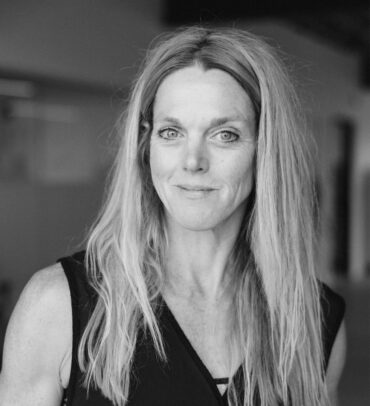
Dr Stacy Sims: Menopause training made simple
For most of a man’s adult life, ageing arrives in a straight line. Hair greys, recovery slows, testosterone drifts down a few percentage points a year. The body changes, but it changes gradually, and the training and nutrition adjustments that go with it can be gradual too.
Women don’t get that. For women, perimenopause is a cliff. Hormones that have been the architectural support of every system in the body — bone, muscle, brain, immune, cardiovascular, metabolic — start dropping rapidly, often years before menstruation actually stops. The body that responded predictably to training in the thirties stops responding the same way. The recovery that used to come easily takes longer. Sleep gets worse. Mood gets harder to manage. Body composition shifts in ways that make no sense given that nothing about diet or training has changed.
Most women navigating this will, at some point, have walked into a GP’s office and been told they’re tired because they’re busy, or stressed because of work, or anxious because of teenagers, or all of the above. The conversation will not have included the word perimenopause. That, on Dr Stacy Sims’s account, is the single biggest medical failure women in midlife are currently dealing with — and the reason so much of the most consequential work in women’s health right now is happening outside the formal medical system.
Sims, the New Zealand-based exercise physiologist whose work forms the spine of our wider Sims interview series, spent two decades building the case that women in perimenopause and menopause need a fundamentally different approach to training, nutrition and recovery than they did in their thirties — and that the standard advice (more cardio, longer sessions, eat less) is the opposite of what works.
This is the full version of that case.
What’s actually happening physiologically through perimenopause that demands a different approach to training?
Think about puberty as a reference point. At puberty, every system in the body is reorganised by the arrival of sex hormones. Boys lean up, get taller, more aggressive, build muscle. Girls’ hips widen, the shoulder girdle reshapes, the centre of gravity shifts, body fat redistributes, and the menstrual cycle begins. It’s a wholesale physiological reset.
Perimenopause is the same process running in reverse. The hormones that turned everything on are turning off, and every system that depends on them is affected. Bone density starts dropping. Muscle protein synthesis becomes harder to drive. Insulin sensitivity falls. Inflammation rises. The cardiovascular profile shifts in ways that increase risk. Sleep architecture deteriorates. Mood regulation gets harder. The thermoregulatory system goes haywire — vasomotor symptoms, the formal term for hot flashes and night sweats, are the most visible sign of a much broader systemic disruption.
The fitness implication is that the training stimulus required to drive adaptation is now different. The body that responded to moderate cardio and bodyweight workouts at thirty-five doesn’t respond the same way at forty-eight. The hormonal environment that used to do half the work of building and maintaining muscle is no longer doing that work. You have to use training itself as the signal, and the signal has to be stronger.
What does the right training programme look like?
Three elements, in this priority order: heavy resistance training, plyometrics, and sprint intervals. Steady-state cardio, where it features at all, is for recovery and aerobic base — not the main event.
Resistance training is the bedrock. Through perimenopause and beyond, the case for women lifting heavy becomes overwhelming. Bone density, muscle quality, neural pathways, falls risk, frailty in later life — every long-term health marker that matters is materially affected by whether a woman is lifting heavy in her forties and fifties. The programming should sit in the three-to-five rep range for compound movements. That’s heavy. It’s meant to be.
Plyometrics is the second non-negotiable. Power declines faster than strength as women age, and only specific kinds of training maintain it. Plyometric work — explosive rebound, fast central nervous system recruitment — addresses this directly. It also produces an acute metabolic response that the perimenopausal body badly needs: a sharp blood glucose response and improved blood glucose uptake without the same reliance on insulin. Insulin resistance is one of the quiet, accelerating problems of late perimenopause and early post-menopause, and plyometrics is one of the few interventions that pushes back on it.
The objection I get is always the same: I can’t jump, my knees won’t let me. Fine. You don’t need to box-jump thirty inches. You can do low-depth box jumps. You can do counter-movement jumps. You can do battle ropes and stay on the floor entirely. The principle is power-based explosive work, not the height of the jump. And if joint integrity is the genuine concern — which it sometimes is, given the rise in inflammation and osteoarthritis around perimenopause — strengthen everything around the joint first, then progress.
Sprint interval training rounds the prescription out. Short, sharp, all-out efforts deliver the metabolic and cardiovascular adaptations that long, moderate cardio used to provide for women in their twenties and thirties — and they do it without the cortisol cost that long sessions carry for a perimenopausal body that is already running hot.
A typical session brings all three together: a couple of compound lifts in the three-to-five rep range, a plyometric block, and five thirty-second all-out sprints with a minute of recovery between each. Thirty-five to forty minutes total. Three sessions a week of that is a real training programme.
How do you fit this into a real life?
Honestly, more easily than most women think. The training that actually moves the needle through perimenopause isn’t the hour-long classes the fitness industry has been selling for thirty years. It’s short, intense, and highly leveraged.
If thirty-five minutes feels like too much, take twenty and just lift. I do this myself. I’m sitting here in jeans and a t-shirt because I did exactly that before dinner. My daughter had soccer practice for twenty minutes. I missed getting to a proper gym, so I did heavy bench and push press in the garage in my normal clothes. Twenty minutes. The sprint work can fit in later — fifteen minutes or less.
The mental shift this requires is significant. Women have been told for decades that more is better — more time on the treadmill, more spin classes, more steps. The training that works through perimenopause runs on the opposite logic. Less time, more intensity, better recovery between sessions. The body responds to specific, demanding stimulus. It does not respond to volume for its own sake.
How does nutrition need to change?
Fasted training, which doesn’t work well for women at any age, works even less well through perimenopause. The catabolic state that fasted training pushes the body into is precisely the state a perimenopausal body should be avoiding. Cortisol is already running high. Sleep is already compromised. Muscle protein synthesis is already harder to drive. Adding the metabolic stress of training without nutritional support is asking a body that’s already struggling to do work it can’t really afford.
The pre-training nutrition prescription is small but non-negotiable. Fifteen grams of protein before strength work — that’s about a hundred calories’ worth, the kind of thing a protein-fortified coffee gets you in two minutes. For cardiovascular work, add thirty grams of carbohydrate. The principle is that the hypothalamus needs to register that nutrition is incoming before it allocates resources to a training stress.
Protein intake across the day matters more in perimenopause than at any earlier point in life. Two grams per kilogram of bodyweight is the rough target. Distributed across meals — not loaded into one. The combination of higher protein intake and resistance training is one of the most reliable interventions for body composition through midlife. Calorie restriction without those two elements tends to produce the worst of both worlds: weight loss that’s mostly muscle, with the body fat stubbornly remaining.
What about recovery?
Recovery cadence shifts. Through the thirties, women can typically push hard two or three days in a row before needing a real recovery day. Through perimenopause, that window often shortens. Pushing through doesn’t make adaptation stronger; it makes it weaker.
The prescription is to plan recovery, not improvise it. Two days on, one day moderate. Or three days on, two days off. The exact pattern depends on the individual and on where in the menstrual cycle a still-cycling woman is. The critical thing is that recovery is built into the programme rather than treated as something that happens when life gets in the way.
Cold water immersion is one of the few acute recovery tools that genuinely works for women — for reasons that are the opposite of why it doesn’t work for men. Sleep is the bigger lever. Sleep deteriorates through perimenopause for hormonal reasons, and most of the things women try to fix it (sleep tracking, blue light filters, magnesium) are working downstream of the actual problem. Hormone therapy, where it’s appropriate, addresses the root cause.
Supplementation matters here too. Creatine moves up the priority list, ashwagandha rises to the top of the adaptogen options, iron remains a cycle-dependent intervention until menstruation actually stops.
Why are GPs missing this?
A typical pattern: a woman in her mid-forties walks into her GP’s office and says she’s anxious, tired, can’t sleep, and her mood changes at the drop of a hat. Most of the time the GP will respond by attributing the symptoms to life: you’re trying to raise teenagers, you’re managing a career, you have older parents to look after, you’re just too busy and too stressed. The recommendation will be to look at ways to reduce stress.
That is not the right answer. That is a woman in perimenopause being told she has a stress problem.
The clinical literacy gap on perimenopause is real and it is consequential. The first useful intervention for many women is an SSRI — a serotonin reuptake inhibitor — which is highly effective at controlling vasomotor symptoms and helping with sleep. The point isn’t that every perimenopausal woman should be on an SSRI. The point is that there are evidence-based pharmacological interventions for the specific symptom cluster, and most women don’t get told they exist. Once sleep starts coming back, everything else gets easier to assess and address.
Hormone therapy is the bigger conversation. The history of hormone therapy is the history of one badly-interpreted study (the Women’s Health Initiative, 2002) creating a generation of clinical caution that the underlying data never really supported, and a slow, painful re-evaluation that’s still in progress. The decision about whether menopause hormone therapy is right for an individual woman is genuinely between her and her physician — but most women have never had that conversation because the assumption built into their primary care has been that hormone therapy is risky and untested. Neither is true on the current evidence.
Why does the cultural conversation matter?
Because clinical change follows cultural change, and the cultural conversation about menopause is finally moving.
The Japanese language has no word for hot flash. Not because Japanese women don’t have them — they do — but because the cultural anxiety about ageing women that drives the Western medicalisation of menopause doesn’t exist in the same form in Japanese culture. As a Japanese woman gets older she becomes an elder; her authority increases; the social position improves. That cultural framing changes the experience itself. There’s no analogue in the West, where a woman who talks about menopause is automatically pigeonholed as old, and where career opportunities for women in Hollywood, in corporate leadership, in any visible field — start drying up the moment menopause becomes legible.
The shift is real, though. The fact that figures like Naomi Watts, Oprah Winfrey and Michelle Obama have started talking openly about menopause changes the cultural temperature in measurable ways. So does the slow corporate uptake of menopause-related workplace policies, particularly in the UK. Last year I spoke to a consultant who works with C-suite teams. He told me about male executives — confronted with the fact that a senior female colleague was anxious, depressed and struggling — concluding that the right move was to manage her out. That is not the right answer. That is a woman in perimenopause being treated as a performance problem.
The men in women’s lives — partners, colleagues, fathers, brothers, GPs — need to be in this conversation. The taboo on talking about menopause across genders is the structural reason so many women navigate it alone. The slow normalisation of the conversation, in workplaces, in households, in primary care, is the single biggest variable in whether the next generation of women has a meaningfully different experience of midlife.
The bigger argument is that perimenopause is the moment everything that’s been wrong with women’s health and fitness research becomes most consequential. The decades of male-default research; the GP training that doesn’t cover the most predictable physiological transition in adult women’s lives; the fitness industry telling women in their forties and fifties to do longer cardio sessions and eat less; the cultural framing that turns ageing into a problem rather than a phase; all of it converges, for women in midlife, at exactly the point when the costs of getting it wrong are highest.
The fix is in motion, but it’s slow, and it’s running on the work of researchers, clinicians and women themselves rather than the medical mainstream. The training and nutrition and recovery framework Sims sets out works. The science is solid. The next ten years should see most of this become the standard of care. For women navigating it now, the work is to find the information themselves, find a clinician who’s done the reading, and build the programme that actually fits the body they’re in.