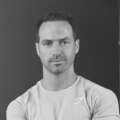
Five and a half weeks out from the inaugural Enhanced Games, world records are already being broken. Earlier this month Chilean weightlifter Arley Méndez Pérez snatched 182kg in training at 88kg bodyweight, 5kg heavier than the current official world record. That follows Greek Olympic swimmer Kristian Gkolomeev, who last year eclipsed the standing 50m freestyle world record, clocking 20.89 seconds during a filmed trial that secured him a $1 million bounty from the organisation.
In Abu Dhabi, at a five-star longevity resort repurposed as a high-performance camp, athletes are running faster and swimming harder than ever. Some of them are 35. Some of them recently came out of retirement. And according to Maximilian Martin, the CEO of Enhanced, they are healthier than they have ever been in their lives.
Depending on where you sit, that claim either sounds like the future of performance medicine arriving ahead of schedule or the kind of thing you’d expect a CEO to say a few weeks before his launch event. Probably both. But Martin has been around this argument long enough to know how the conversation tends to go. He has read the knee-jerk “steroid olympics” headlines a hundred times. When we asked about mainstream media coverage, he didn’t seem angry. Just a bit bored. What makes him put his head in his hands isn’t the criticism itself. It’s the copy and paste quality of it. “Where is the good journalism?” he asks. “Where’s the journalist that’s interested in reporting something that hasn’t been reported before?”
Fair enough. Because whatever you think of the Enhanced Games, what Martin and his team are actually building is far more structured and clinical than the controversy would suggest. The organisation is spending north of $100,000 per athlete over four months on medical care and enhancements alone, all administered through a clinical study approved by Abu Dhabi’s Department of Health and run with the country’s top hospital. Athletes undergo continuous blood work, organ imaging and protocol adjustments. The dosages started deliberately low and the monitoring, Martin says, never stops.
Then there’s the question that rarely comes up in the coverage: what actually happens to an elite sprinter or swimmer when you take away the thing that has shaped their entire competitive life? Not the banned substances. The fear. The constant looking over your shoulder. What happens when, as Martin puts it, you stop testing for banned substances and start checking whether someone is actually healthy enough to race?
Whether that reframing is a genuine contribution to how we think about sport or just a good line from a great operator is, obviously, up for discussion. Martin would probably say it’s both, and use the fact that not all athletes competing at the Enhanced Games are using enhancements as proof of their sincerity.
He talks about the inaugural games the way founders talk about launches: year five, year ten, other leagues influenced to rethink their approach. He compares the Enhanced Games to where the UFC were in 1993; the outsiders who let the public decide if they deserved attention.
What follows is the first of a three-part conversation recorded while Martin was on the ground in Abu Dhabi, overseeing final preparations. He talks about what success looks like, why he thinks the media has got his organisation wrong and what it will take for people to stop arguing about whether enhanced sport should exist and, instead, focus on what it’s already doing.
The Enhanced Games is the first sporting competition of its kind to openly permit performance enhancements under medical supervision. The inaugural event takes place at Resorts World Las Vegas over Memorial Day weekend (May 21-24, 2026), featuring track and field, swimming and weightlifting. Athletes compete for $500,000 prize purses per event, with $1 million bounties for world records.
Can you believe that, next month, the first ever Enhanced Games is going to take place?
I kind of can, but then on the other side, it’s still wild. I’m actually in Abu Dhabi right now at the training camp that we’ve set up for the athletes to prepare for the games. And just seeing the athletes perform, we have had two world records already broken in the last two weeks, which is crazy if you think about it, six weeks out from the games.
We have other athletes that are 35 years old breaking their personal best from when they were in their prime in their twenties.
If you just look back a year ago, two years ago, where we were to where we’ve come today in that amount of time is remarkable.
When we get to the games, what are you looking forward to most?
Seeing happy and good performing athletes. That’s really everything why we started this organisation. What’s been always theorised to us is to improve and appreciate the athletes, which are the foundational layer and backbone of any sporting event.
And so that’s what I personally look forward to the most, seeing those athletes that we’ve been working with now for an extended period of time absolutely shine. But then also I think the longer term ripple effects of what we’re going to do. People will see that no one actually explodes by getting on enhancement. People will see that athletes are not just going to break world records, but that they’re going to do this at a point in their life when they’re not necessarily destined to do that, while also being healthier than they’ve ever been.
And so this is going to really change the perception of what we’re doing so much. And I hope that we can inspire, not in year one, but by year five, by year 10, other sporting leagues to look at their approach of testing.
Am I still going to take a view of this is what the law allows for athletes and this is what I’m putting in as a regulation on top of that? Or are they going to say law is the law, approved substances are approved for a reason.
If they can be prescribed to you by a doctor, we have seen from the work that Enhanced has done that if you have the right medical and clinical testing in place, you can make sure that those enhancements are administered safely. Athletes are healthier than they’ve ever been. And then take that view on how are we testing athletes. Are we going to continue to test for substances that are not allowed, or are we going to start testing for whether an athlete is healthy and safe to compete?
And so that is really the longer thing that I’m personally excited about, the impact that we will have in the global sporting industry.
What has to happen during the games for you to walk away and think we have fundamentally changed the landscape of sport?
Two things. One we talked about is athletes safely breaking world records. But the other thing is really showcasing that if you’re in your 30s, we have a couple of athletes that are in their 30s that came out of retirement to now become, with the help of enhancements, the best that they’ve ever been. And I think showcasing that to the world under that immense amount of pressure, that you’re 35 and you’re performing better than your 23-year-old self, that is remarkable.
Also, I think what is important is that the operation of the event itself needs to be at an ultra high class. We’re not going to get away with putting together a half-baked event. Everything needs to be neatly operated. And then I think we have the opportunity to establish ourselves on the global sporting calendar as one of the must go to events.
What’s the sort of best case scenario? Can you paint a picture of what that looks like on the day for how things go?
I think it’s a combination of records and personal bests, but then also in terms of how many people around the globe are we reaching, how many people are inspired by the performances of these athletes, how many people are thinking about their own approach to healthcare differently because of this.
The way that we’ve been framed, the way that we’ve been positioned and talked about is nothing of what we actually are and what we’re doing. And so I think what is important to see, or exciting to see more, is how people will change their approach to enhancements.
Thinking about abuse of steroids, which can be extremely dangerous, the abuse of unregulated substances, which is what we’re against, to a monitored and administered, medically and clinically administered use of performance enhancements, and seeing what that unlocks for athletes, but then also asking yourself what can that unlock for me as an individual. And so that is really exciting to see.
What moment is most likely to go viral?
Either a world record or a very funny blooper that we don’t foresee.
If we look back in 10 years time, what do you think people will say about the significance of this first event? What does it represent for you?
I don’t think of it as an event to think back to. I think it’s really that we’re freeing ourselves from the leashes more. We’re enabling ourselves to do even better, even more in the future.
And so I think what we’ll be looking back to maybe is that we’re proud of everything that we’ve established. We’re proud of how we’ve changed athletes’ lives. But what we’re more excited about is that has become the foundational layer of everything else that we want to build on top of it.
There’s been so much written about the Enhanced Games. Are you now looking forward to the event and the athlete performances doing the talking?
Having always worked on Enhanced and having always known that what is written about us is not necessarily true kind of blunts you a little bit about the imopact that those things will have on you. I think people should always form their own opinions. But what I’m glad is that on a much bigger scale than what we did last year with two athletes competing for a world record and one of them broke it, we have a much larger scale of people that are going to be able to showcase the benefits of enhancements.
We’ll also have at that time a ton of data available that we’d be able to report and share on the protocols of the athletes, the developments that they’ve seen in terms of their performance, their biometrics, all of their blood, saliva, urine samples, organ images, to really showcase what impact it’s had on their health as well. And then people can take an opinion on what we’re able to show, but I’m excited to share it at a much bigger scale than we have in the past.
What makes you put your head in your hands when you read about the games?
When I put my head in my hands is when I’m reading the same thing for the hundredth time. And I’m thinking about where is the good journalism? Where’s the journalist that’s interested in reporting something that hasn’t been reported before?
There’s a few of them like yourself who do the work, peel back the onion one or two layers, try to stay objective, form their own opinions, and that’s absolutely incredible.
Why do you think you’ve had the coverage you’ve had?
We’ve been very aggressive in the way that we went out to the world. I think we’ve also just over the past two and a half years developed a lot as an organisation.
Now having the athletes here in Abu Dhabi where they’re getting enhanced as part of a clinical study that’s approved and established in partnership with the Department of Health, the health regulator here, where we’re working with the best hospital in the UAE on the enhancements for the athletes, where we’re deploying more than a hundred thousand dollars per athlete in a period of four months, like $25K a month. It’s just the enhancements and the healthcare per athlete. It’s just insane. So we have done a ton of work to make ourselves who we are today.
And that is just something that’s happened over time. Whereas initially what we went out with is just a completely different approach with less actual achievement to showcase and underpin what we are actually doing.
Which is we’re not going to be drug testing in a traditional sense, and we’re going to see athletes break world records because of that, because they are able to tap into new pockets of potential because of enhancements. Now we can talk much deeper about it. We can showcase what we’ve done. We can showcase how serious we’ve taken this both from a setup perspective as well as a capital investment perspective with what we’ve done.
And then also trying to criticise ourselves, there’s still a lot more that we can do in terms of reporting on what we’ve done, creating content about it and telling athletes’ stories about it.
If someone was still in the mindset of thinking, I’m unsure of or even I’m against this competition, what would you say to them to influence them or to change their mind?
It’s not my job to change someone’s mind. Our job as an organisation is to present objective facts and hopefully have people get inspired by the stories of our athletes. There’s no product or enhancement that is going to be appealing to everyone.
There are people that will always choose, instead of getting enhanced, to just maximise on nutrition, exercise and sleep. And that’s fantastic for them. But we know very well through how we’ve developed as a society, how we’ve thought about our approach to healthcare, that there’s a lot of people out there that are very interested in the work that we’re doing.
And so rather than focusing on converting the naysayers, we’re focused on building the best products for the people that are very keen on those.