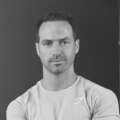
If you had to design the person you’d want on your side if you were an athlete about to walk into the most scrutinised sporting arenas of the modern era, you’d probably end up with someone who looked a lot like Rick Adams.
Six Olympic Games. Fourteen years inside the American Olympic machine. Former Chief of Sport Performance for Team USA at the Beijing and Tokyo Olympic Games. Former CEO of USA Weightlifting. It’s a career almost entirely defined by one job, done thousands of times: putting athletes in a position to be at their best on the day it mattered most. He is, in a sporting sense, the guy who has seen it all.
Well, maybe not everything. Because now, just five weeks from the inaugural Enhanced Games, he is the Chief Sporting Officer of the organisation that most of his former colleagues may describe as the opposition. And he is the person the 40-plus Enhanced Games athletes (many of them walking into territory that could cost them future sponsorships, appearances, coaching roles and even friendships) have been leaning on to get there. That’s something no one has seen or navigated before.
Money is earned, taxed, and spent. But what you have left is how you lived your life. And I want you to be proud of how you lived your life.
Listen to him talk about them and a word that stands out is “kids”. “I had the good fortune of being the person who recruited the team and got to know these kids individually and have gotten to know their families,” he says.
He recruited them. He got to know their families. He encouraged every athlete he signed, and even the ones he didn’t, to speak to the people in their lives who loved them before making a decision. When the money came up, he told them something that sounds more like a father talking to a child than a sporting executive closing a deal: “I said, money is earned, taxed, and spent. But what you have left is how you lived your life. And I want you to be proud of how you lived your life. So don’t come for the money.”
They are the kind of words you can’t really fake. And it’s the sense of steadiness that stands in unintentional opposition to the way the Enhanced Games has been framed in some of the more excitable corners of the media. The narrative out there is fast, reckless, dangerous, ethically adrift. Adams, in person, is none of those things. He is, if anything, the most reassuring presence you could possibly put next to a group of athletes stepping into genuinely uncharted territory.
He’s also, it has to be said, very much the target consumer for the business he’s now helping to build. He is 63. His testosterone levels are, in his own words, “below room temperature”. He wants to hike Pike’s Peak in Colorado, play tennis with his wife and keep doing the things he enjoys for as long as he can.
Enhanced has been open from day one that the sporting event is the flagship for a direct-to-consumer performance medicine company and that the long game is to become the globally trusted brand for enhancements in the lives of ordinary men and women. Rick Adams is one of those men.
Whether the move has cost him old friendships is a question he answers the way people answer when they’ve already worked through the harder version of it privately. “The people that care about you authentically and love you for who you are will stand by you, and some relationships are situational.”
What follows is the first part of a two-part conversation with Adams, recorded weeks out from the games, about the final five-week sprint to Las Vegas, where the Games will be staged on May 24th 2026, the personal cost of changing sides, and why he thinks every measurable record in objective, time-based sport will eventually belong to an enhanced athlete.
Who is Rick Adams?
Current role: Chief Sporting Officer, Enhanced Games (since 2024)
Career highlights:
- 14 years at the U.S. Olympic & Paralympic Committee (2010–2024), most recently as Chief of Sport Performance and NGB Services
- Chef de Mission, Team USA, Beijing 2022 and Tokyo 2020 Olympic Games
- CEO, USA Weightlifting (2009–2010)
- CEO, LeMond Bicycles (2022–2024)
- President & CEO, East Coast Hockey League (1994–2003)
Education: Rutgers University School of Law
At Enhanced: oversees the inaugural Enhanced Games in Las Vegas (May 2026), athlete recruitment, and the Enhanced Performance Team — a cohort of 40-plus athletes preparing for the world’s first openly enhanced sporting event.
For more on the Enhanced Games, click here.
What’s your main focus five weeks out and is there anything keeping you up at night?
Yeah, definitely some things that keep me up at night, but I’m comforted by the team that we have. I’ve had the good fortune of being involved in six Olympic games and lots of very complicated international competitions.
You learn in those events that it’s the aggregated good work of many, many individuals that ultimately help you reach an outcome.
What I’m focused on now is really twofold. One is making sure the athletes who have made, in many cases, significant personal and professional sacrifices to do this – they’ve endured their own narratives, their own impact, legacy impacts, their own family, friends, hometowns – making sure that they’re able to be at their best on May 24th.
That was always our goal at Team USA, putting the athlete in a position to be at their best, whatever their best is. That ultimately is the result of sport. So there’s one aspect of it that is focused solely on the athletes and doing everything.
And the second is making sure that when those athletes are at their best, they’re in a venue that meets elite Olympic standards.
When you get there, what are you most looking forward to?
I’m really looking forward to seeing these athletes perform, and not just on a world record basis. I mean perform on a personal best basis, on the basis of relative to what was possible.
And I say that in part because I had the good fortune of being the person who recruited the team and got to know these kids individually and have gotten to know their families. So I’m really looking forward to that.
The second thing I’m really looking forward to is I truly believe that after May 24th, the focus on us, for most will shift to this is about longevity, this is about health and wellness.
I’m almost 63 years old. My testosterone levels are below room temperature. And I’m interested in living a long life and being able to hike Pike’s Peak and play tennis with my wife and do all the things that I enjoy doing.
And I’m fully committed to the idea that the way to do that is to be responsible, but avail yourself of what’s scientifically and medically possible. And that’s what drew me to the games in the first place on a personal level. I believe in this.
How confident are you that records can be broken on the day?
I’m confident records will be broken.
And I think it’s important to note that this is our inaugural event. This is not a one-off. This is not a cliff. There will be annual enhanced games, which will be multi-sport spectacles. There will be one-off brand events that will highlight specific sports, specific athletes.
So this is the beginning of the tally. This is not the tally. But yeah, I am confident that records will be broken.
If you had to back one of the three sports at the Games that will break a record, what’s most likely?
Well, some sports you have a better read in the lead-up than others about what’s possible.
We had heat charts on every athlete leading up to the Olympics and ran Monte Carlos and had massive statistical analysis about what’s possible. It still has to happen on the day.
Obviously, having run USA Weightlifting for a couple of years, I’m familiar with weightlifting, and I think we’ll see records there for sure.
It’s no secret that we’ve got a couple of swimmers in particular who are at that level for sure, with Ben [Proud, the British sprint swimmer and Olympic silver medallist] and Kristian [Gkolomeev, a 31-year-old Greek Olympian, unofficially broke the 50m freestyle world record with a time of 20.89 seconds during a February 2025 event for the Enhanced Games], and I think there’ll be others.
The swimmers being in super suits [high-performance swimsuits that were eventually banned from official competition by World Aquatics] is going to be something that hasn’t been seen since 2010, so 16 years later. So how much quicker will they be? We’ll see.
Obviously, we’re confident that Thor [Bjornsson, former World’s Strongest Man] and Mitchell [Hooper, a four-time Arnold Strongman Classic champion] will have a good go at the deadlift and stuff.
The track side, that’s a high peak. The men’s and women’s hundred is a high peak. And again, what I think we’ll see is, I never would rule it out, but I think what you’ll see is that that is a record that will be chased with great intensity here in the coming years.
I don’t know if you’ll see it May 24th, but that hundred metre record on the men’s and women’s side is one that we are going to put ourselves forward to do in time.
So is it a question of when, or if?
Yeah, it is a when.
I’m keenly aware of the challenges of it. I say often internally that when there’s a single heartbeat on the planet that owns something, you should respect how precious that is.
And so when you have a single person, in this case Usain Bolt on the men’s side, it’s incredibly difficult.
But at the same time, records are broken all the time, even those that are heretofore considered unbreakable.
Sport requires intentionality. You have to focus on that. You need the right athletes in the right environment for the right amount of time on the right track.
And we’re committed to making it happen.
How big can the games become in future years?
I don’t think there are limits because there are so many things that can test the human limit. So I don’t think we have structural ceilings.
What I would say is that we’re committed to, as a company, as Enhanced, which is a direct-to-consumer company that does and will continue to be expanding our product line and becoming the globally recognized and trusted brand for enhancements. What we do on the sports side will accelerate that part of the business.
So we will not simply do sport for sport purposes. We will do sport because it will help us be the globally recognised and trusted brand for enhancements.
Any limitations that we place would be based on the overarching strategic plan of the company and what our objectives are.
Can you see a point in the future where every meaningful sporting athletic record is held by an enhanced athlete?
Well, I think it’s possible. I think it, you know, you’ve got to think about, there are a lot of records. A sport like rowing essentially doesn’t have that level of objectivity because you’re rowing under different conditions every day. Not every 2000 meters are created equal.
There are lots of team sports, there are lots of combat sports.
So I think you really have to look at what are the timed sports, what are the objective measurable sports. And in those cases, it certainly could be the case.
I think what we will prove and are currently proving is that this can be done safely. It does require significant medical rigour. We have said that from the outset, despite a narrative built differently.
How easy a decision was it for you to make to get involved?
After some initial work, it was easy for me. I actually hadn’t heard of the Enhanced Games. I got a call and I had been a couple of years out of the Olympic and Paralympic movement and was running a bike company for Greg LeMond and really enjoying that.
And I hadn’t heard of it. But I knew the recruiter well from a previous life and did my homework and then went to an offsite for two days in England and listened, almost entirely just listened.
And as I learned and I went through my own process and had my own personal, again, I guess I was 61 or so then, once I realised that this is not the Olympics, this is different, this is the pursuit of generations of people living longer, better, healthier lives, it was very easy for me to get involved in that.
And I certainly have people who I traveled the world with and felt very close to, and not all of them have embraced this decision that I’ve made. But I’m a big believer that over time, the story of Enhanced will be about the positive things that it can do for generations of people, and I’m proud to be involved in it.
Did you speak to anyone in the process of making your decision? And what did that conversation look like?
I did. I spoke to a lot of people, actually. And that’s partly why I think I encouraged athletes to undertake a similar journey, because I wanted to live by what I went through.
Certainly, having been the Chief of Sport Performance for Team USA and working closely with USADA and IOC and others, there was scrutiny of it.
But yeah, I spoke to lots of people and you learn in life that the people that care about you authentically and love you for who you are will stand by you, and some relationships are situational.
And that’s a hard learning for some in life, but I’m very proud to be here. I’m proud of what we’re doing and I’m excited for what the future holds.
Has it cost you any friendships from your previous professional life?
I don’t know that I would couch it in those terms because, again, I was not working at the Olympic committee. I didn’t leave the committee to come here. I think had that been the case, it would have been different.
So I had already been out for a couple of years and, this is always the case, when you’re not traveling and working with people on a day-to-day basis, those relationships tend to have less frequency to them. So at the point that I joined, there wasn’t a material change for me.
And I’ve made it very clear to everybody when I left the Olympic and the Paralympic world that I believe it is a world we all need to feel privileged to have been a part of.
We’re there to serve the athletes. There were people before us and there will be people after us. Our job is to do the best we can in the time that we have there and that’s how I lived it.
Photography Chris Kiridis