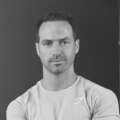
For eight years, Phil Newman has watched the longevity megatrend gather momentum. As founder and CEO of First Longevity and Editor-in-Chief of Longevity Technology, he has had a front row seat as the industry evolved from niche curiosity to cultural phenomenon. Now he’s building a stage of his own.
The Longevity Show, launching this June at London’s Tobacco Dock, is described by Newman as the “first large-scale category event focused on the consumer.” Backed by a strategic investment from events heavyweight Events Venture Group (EVG) and supported by partners including Hertility, which will co-lead a women’s health summit at the show, the event aims to bring together consumers, innovators and corporations exploring the emerging longevity economy. Newman is clear about the ambition. “I’d like it to become the CES of longevity,” he says. “A place with the latest technology, thousands of people engaging with new companies, and where companies hold back their announcements for the show.”
Having launched Longevity Technology in 2018, Newman appears to have anticipated the current wave of interest but he rejects the idea that the pursuit of a longer, healthier life is a contemporary obsession. “People could argue that humans have been looking to discover immortality for millennia. But what we’ve seen recently is a growing awareness, both within the industry and outside of it, that ageing is plastic.”
That shift in perception underpins the structure of the event itself. Over two days, a business conference and consumer expo will run side by side, with influencers such as Joe Wicks, Ferne Cotton and Davina McCall sharing a bill with regenerative medicine experts such as Dr Ash Kapoor and health-tech founders like Inside Tracker’s Gil Blander.
“What we’re really seeing is a confluence of many industries moving in behind what was already the longevity industry, but which had been working in its own silo. That’s why we’re seeing so much of it now. People like Brian Johnson and other social influencers have raised awareness of the theme, but there have been people working in the industry for many years.”
The immediate goal is not immortality, Newman argues, but morbidity compression. “Hopefully, the period of morbidity at the end of our lives, which we’re still going to experience at some point, is compressed into the shortest possible time. You live a long, healthy, fulfilled life. In doing so, you may be able to breach some of the age limitations we currently experience. Maybe people go from living into their mid-80s to their mid-90s in good health. Maybe more people become centenarians in good health.”
With Founders Forum Group, the global invite-only entrepreneur community, as partners, alongside new collaborators including Hertility and fresh investment from EVG signalling industry optimism, The Longevity Show looks well placed for a healthy start.
What are you hoping to achieve with the event?
The longevity show is the first large-scale category event focused on the consumer. We believe the longevity industry is now mature enough. People are aware of the subject.
We felt now was the right time to bring an event like this to market so people can access the latest thinking, the latest guidance from opinion leaders, and see the latest technologies available to help them start controlling their own healthspan and lifespan.
What can people expect?
We’re running it with a large exhibition. That exhibition serves two purposes. We’re also running a business-to-business conference alongside it, but not the usual clinical-focused B2B longevity conference. We’re bringing in large corporations, financial services, fast-moving consumer goods companies and food conglomerates so they can understand how to shape their businesses around the emerging longevity economy.
So there’s education for industry, which hasn’t really happened before. There’s education for consumers, which hasn’t happened at scale before. And there’s a shared exhibition hall where pioneers in the space are available to both audiences to explore and engage with.
We see it as great networking between the business community and consumers, with standout speakers sharing knowledge that’s currently hidden in different silos. We’re bringing all of that together in one place.
What made you think now is the time to do this?
We’ve run our own events before with a similar model, but in a very different way. They were very exclusive, focused on making sure the right people were in the room. What we were doing recently was mixing what I call the longevity now economy, which includes gyms, supplements, clinics and biomarkers, with biotech companies.
Those are very distinct audiences. We decided to address biotech in a different way. What we wanted to do was scale interest in the longevity now economy and then open that up to consumers.
Can you walk us through what a day at the event might look like?
We’ve got some standout speakers. You’ll learn, for example, how dental health directly correlates with longevity. You’ll learn how mindfulness and stress management, keeping cortisol levels down, play a role in managing your healthspan.
We cover everything from pet longevity to biomarkers to financial longevity. If you’re going to live longer, you need to plan for it financially. We’re covering the entire universe of what it means to live a longer, healthier life and the implications of that.
One of the most important aspects is downward and sideways education. A lot of people in this space are self-motivated, but sharing knowledge with friends and family is critical. Bringing up children in the right way so they don’t accumulate the damage that people in our age group already have is incredibly important.
It’s not about living a long and miserable life. It’s about setting the right trajectory, controlling sleep, alcohol intake and stress levels. That educational element really matters.
The second part is demonstrating where all of this is going. We plan to show what the longevity home of the future will look like, what the longevity gym of the future will look like, and what longevity clinics of the future will look like. That’s a big part of the experience.
Can you speculate on any of that? What might some of those things actually look like?
If you imagine coming down for breakfast and, based on your biomarkers, being given a diet plan and a day plan. It looks at your calendar and anticipates that you’re going to be stressed in the morning, so it builds in time for mental wellbeing in the afternoon.
These are interconnected experiences that don’t fully exist yet. We want to map out what that looks like and what the equipment in your home might be.
Do you give yourself 20 minutes in a red light sauna? Half an hour or an hour in a hyperbaric chamber? Do you plan that into your day? What should you be doing to optimise your exercise that day? More cardio or more resistance?
That’s where we see the interconnection between the home and these technologies really starting to come together.
Moving into gyms and clinics, what do you think that has in store?
More or less a professionalisation of what you’d have in the home. That’s really what we already experience, isn’t it? When you go from a home environment into a professional one.
I was speaking with a company today that’s developing vending-type machines. You input your biomarkers and it dispenses the right level of supplementation for your body on that day. Likewise, there are some very exciting gym equipment companies now that fully integrate with your biomarkers. They help you understand the age of your heart, your heart trajectory, the age of your muscles.
That’s really just the physical side of the human. There’s also the complexity of the brain, making sure the brain is as optimised as the body. We plan to map all of that through. This first year, delivering a successful consumer event, is really about building standout experiences for visitors.
It’s in London. Was that an easy location choice, or did you consider other places?
It’s an international show based in London. The industry is very international, and our reach is international. Most of us are based in London, so we decided to start on home turf. But it is very much an international show.
We plan to stage a similar event in Asia Pacific later in the year, and then in 2027 we’ll go into America.
Looking ahead five years, what do you hope this becomes as a live event? What areas would you like to grow beyond simply getting more people through the door?
I’d like it to become the CES of longevity. A place with the latest technology, thousands of people engaging with new companies and where companies hold back their announcements for the show.
If you’ve ever been to CES, there are two parts. There’s the show floor, and then there are meeting rooms above where all the business gets done. We are absolutely a business facilitator, and that will be a big part of what we do.
Think of us as CES for longevity in a few years’ time.
The Longevity Show, 26-27th June 2026, Tobacco Dock, London.