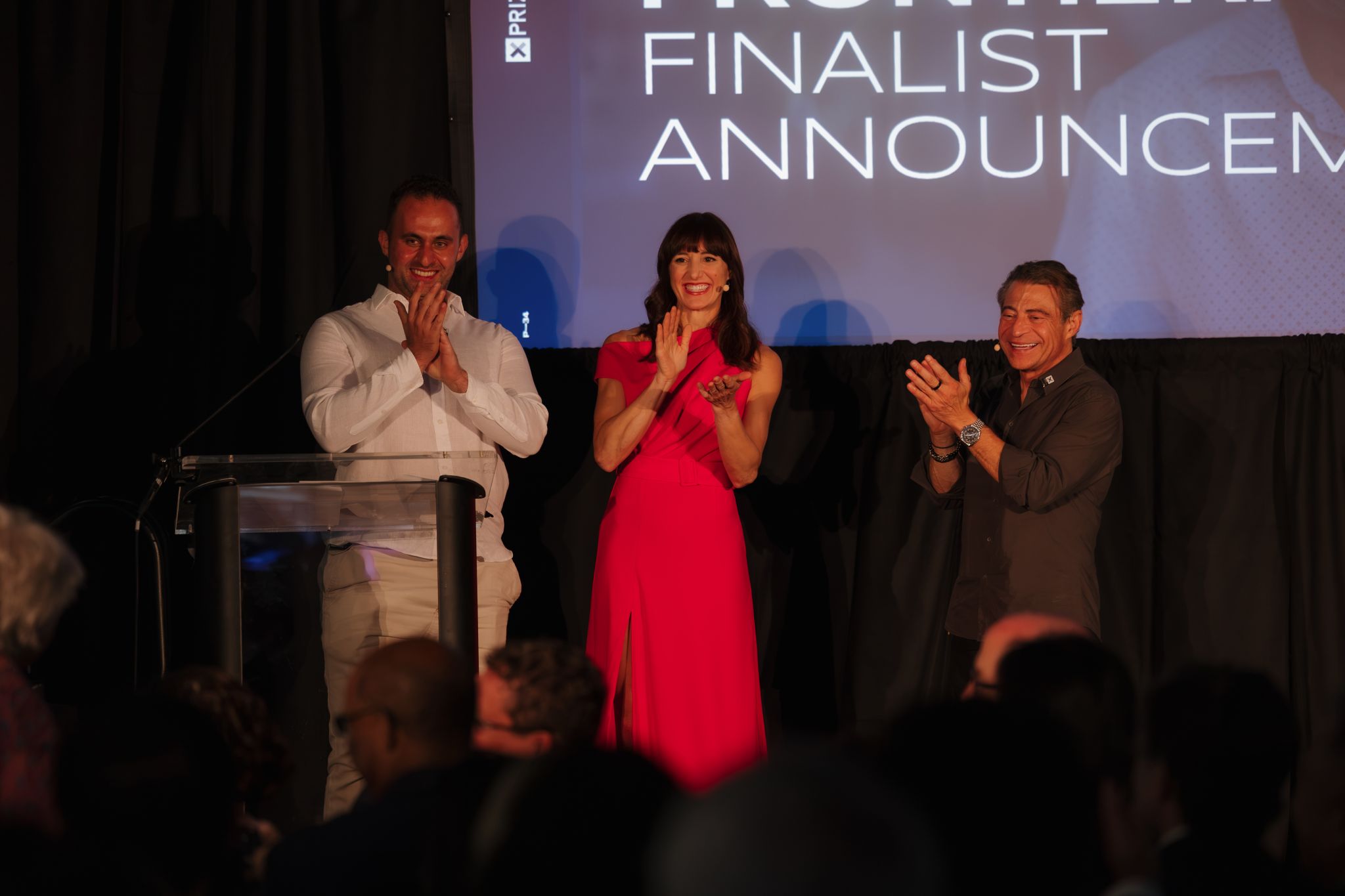
“I never thought we would actually get a winner,” says Dr Jamie Justice, Executive Vice President of Health at XPRIZE.
She is talking about XPRIZE Healthspan, the project she oversees. It is a seven-year, $101 million global competition to develop therapies that restore the function people lose as they age.
To win, a team has to run a one-year randomised controlled trial in adults aged 50 and over and show that their treatment restores muscle, cognitive and immune function by the equivalent of at least ten years of age-related decline. Proof of ten years pays $61 million. Fifteen pays $71 million. Twenty pays $81 million, with the remaining $20 million prize pool distributed during earlier stages of the competition. The trials must be finished by the end of 2029, with the grand prize awarded the following year.
Justice, who featured at #72 in the 2026 Unfiltered Longevity 100, is not the only one who thought it couldn’t be done. “Just last week, I was having a conversation with the chair of our judging panel, and he had the same thought,” she says. “He thought that this was really crazy, and it was really foolish.”
This is not what you expect to hear from a senior figure within one of the longevity industry’s highest profile projects. What follows those two admissions, though, is where the project’s true value lies.
Justice explains carefully and deliberately that the judging panel chair had doubts “until he started seeing the data”. Over the past year, the semi-finalists stopped writing proposals and started working with real people. Teams ran proof-of-concept clinical studies and submitted de-identified results. The judges then assessed them on what had actually happened in human subjects rather than on what looked good on paper.
And what they saw overturned their own expectations. The judges had spent earlier rounds pushing teams towards combination therapies but seven of the ten awardees turned out to be single treatments, and the supplement-stack-and-app model, which is a pillar of the current consumer longevity market, was the approach that lost out.
The $81 million may attract entries and secure media coverage but, according to Justice, it is separate from the success and impact of the project and, whatever happens, everyone involved – and indeed humanity in general – will benefit.
“When you run a moonshot prize, only a tiny bit of what we do is to give away money. We use the money and the major prize purse as a large carrot in order to create change and impact. In pursuit of the competition, we have centralised data resources. We have centralised labs. We provide technical validation, we accelerate timelines, we’ve done regulatory framework building.
“There’s now going to be this dataset and evidence base where we can start thinking about what is the next-stage therapeutic, because we’ve structured the data in a way that, even without a winner, we all win. And so I think that’s an intelligent choice in actually how we design a moonshot. While everyone’s focused on the $101 million, for us it’s a conduit to advance science.”
XPRIZE itself has been running incentive competitions since it was founded in 1994 by the entrepreneur Peter Diamandis (#26 on the Longevity100 power list), who has since become one of the longevity industry’s most prominent figures. Its best known was the $10 million Ansari prize for private spaceflight, claimed in 2004 by SpaceShipOne. The model is simple and compelling: put up a purse for a problem that markets and governments have not yet solved and set a threshold that nobody is entirely sure can be met.
The Healthspan prize has attracted over 800 teams from 73 countries. Earlier this month they were whittled down to 20 finalists, with ten receiving a Milestone 2 award of $1m, including funding, plus access to the competition’s shared laboratories and data centre, to help pay for the trials that will run until 2029.
Advancing science isn’t the only benefit. The prize, the structure, and the network all create a commercial pathway for the teams involved. “This has been the number one reason that people are getting involved in XPRIZE. They’ve noticed, by being part of the competition and having an independent judging panel, to finally have somebody just as an arbiter of the snake oil — to say, actually, here’s the evidence, this looks promising, and it’s adjudicated by a completely independent 15-person board.
“They’re able to go out on the back of some of that credibility and be able to raise funds that they haven’t before. We’re giving investors a really nice, clear target for which of these companies might be worth investing in.”
XPRIZE Healthspan finalists 2026: the 20 teams competing for $81 million
Twenty teams advanced to the finals of the $101 million XPRIZE Healthspan competition on 11 August 2026, and ten received $1 million Milestone 2 awards. Here is every finalist, where they are based and what they are actually testing.
Ten teams received $1 million Milestone 2 awards:
AgelessRx (United States): A telehealth-delivered combination protocol: rapamycin, low-dose naltrexone, metformin, NAD+, glutathione, sermorelin and tirzepatide, paired with resistance training and health coaching. Its semi-final trial enrolled 26 people.
Goda Lab (Japan): Engineered extracellular vesicles from stem cells or plasma, using a proprietary surface-targeting platform to deliver regenerative cargo to muscle, neural and immune cells. A University of Tokyo and Tohoku University collaboration.
Johns Hopkins–Suninflam (United States): SIF001, a monoclonal antibody that blocks Galectin-3, a protein implicated in chronic inflammation and amyloid aggregation. Its final trial will run in 100 adults aged 65 and over.
Longeveron (United States): Laromestrocel, an allogeneic bone-marrow stem cell therapy. One of the most clinically advanced finalists: a 148-person Phase 2b frailty trial published in Cell Stem Cell in February 2026, and a 49-person Alzheimer’s trial in Nature Medicine in March 2025.
Minicircle (United States): A non-viral plasmid gene therapy delivering follistatin and klotho by subcutaneous injection, designed as a cheaper alternative to conventional gene therapy. Its semi-final data came from 14 adults treated at a clinic in Honduras.
Mitochondrial All Stars (United States): Elamipretide, a mitochondria-targeting peptide that binds cardiolipin in the inner mitochondrial membrane, which received FDA accelerated approval in 2025 for Barth syndrome, a rare mitochondrial disease. A collaboration between Mighty Therapeutics and the University of Washington.
NYC-Vita (United States): Low-dose rapamycin and spermidine combined with home-based interval and resistance training, layered with deep immune profiling and whole-body MRI. Run out of Mount Sinai’s Healthspan Program.
RETRO-EPIGERNA (China): The KYN Composite Capsule, combining medicinal Chinese herbs and probiotics to restore a tRNA modification associated with ageing. From Macau University of Science and Technology.
RPRGAON (South Korea): Progerinin, a small molecule designed to reduce the accumulation of progerin by disrupting its interaction with lamin A, developed for Hutchinson-Gilford progeria syndrome and now being extended to general ageing. In Phase 2a at Boston Children’s Hospital.
TIME TRAVELER (Japan): Extracellular vesicles extracted from parsley, taken orally. The team screened EVs from more than 140 edible plant species before selecting it, and tested it in 40 adults aged 55 to 69.
Ten further teams advanced to the finals without a Milestone 2 award:
ASU Team Healthspan and the Boston Healthspan Team (United States); Abe Yoando Pharmaceutical, the Japan Longevity Consortium and Morinaga Healthspan (Japan); GI Innovation and Lono Jaeyak (South Korea); NUS PROMETHEUS (Singapore); GOQii Sanjeevini (India); and ANI (United States).
What happens next: All 20 teams now run one-year randomised controlled trials in adults aged 50 and over, using the same tests and the same central laboratories. To win, a team must show its therapy restores muscle, cognitive and immune function by the equivalent of at least ten years of age-related decline. Trials complete at the end of 2029; the grand prize is awarded in 2030.
Dr Jamie Justice on the XPRIZE Healthspan finalists, biological age and the longevity hype crisis
The XPRIZE Healthspan Executive Vice President on why the winning teams surprised her own judges, why the competition measures walking speed rather than epigenetic clocks, and what GLP-1s mean for healthy ageing.
What surprised you about the 10 finalist teams who were Milestone 2 awardees?
The big surprise is that we only had a couple of teams that were really chasing canonical pathways [well-established, widely studied biological mechanisms and standard drug targets already known to influence aging].
When I think of canonical pathways, those are things that have come out of, say, animal testing programmes like the Interventions Testing Program, or others, or that have been really heavily featured. These would be the rapamycin, the metformin, the repurposed drug pathways. We did have two teams certainly doing that. But the rest of the eight, no. They’re really testing things that were either sort of regenerative in nature, or very different targets that haven’t really been talked about with ageing, within gerotherapeutic discussions.
Of the qualifying submissions, 38% of them were monotherapies, but then 70% of the ten that got the Milestone 2 award were monotherapies. Does that tell us anything significant?
Just that the judges, in the earlier round, were really pushing for more multimodal therapies. In the original rounds they were saying that we’re probably not going to see a single therapy that makes some kind of a breakthrough. It’s going to be some kind of combination, or how they’re going to personalise it.
But then going into finals, it really is a surprise. We asked teams to actually demonstrate their therapy and put them into trials, and the judges met, and they reviewed de-identified data. They looked at actual results. And they ended up prioritising those that had demonstration, and some of those demonstrations might have been easier to tell a cleaner story about what was happening in that last round, that happened to have single or simplified strategies, and that they had novel therapies the judges weren’t expecting.
So there was a lot of discussion about this being sort of high risk, high reward territory. Some of these, it’s like, with their unexpected approaches, their unexpected pathways, but they did have a level of rigour and evidence behind them that the judges prioritised.
They happened to be more of the monotherapy types that were of classes that we weren’t really expecting. Everything from monoclonal antibodies with novel targets in the brain, to various extracellular vesicle based therapies and cell therapies, and even a gene therapy.
We have multiple of both of those types in the competition, but you’re right, some of those were part of, like, a gene therapy plus a plasma exchange plus, plus, plus, plus. And the judges did have some concern about, in those conditions, that maybe more is not better. And so sort of isolating it down and saying, okay, let’s start here. This seems like a more feasible, scalable approach that you could probably stick with for a year, versus some of those that are very much multimodal in the truest, biggest sense. So they ended up prioritising the other side.
Because what works and what’s interesting isn’t necessarily the same thing, right? If we’re looking at what you found interesting but wasn’t in the final ten, did anything stick out?
There were actually quite a few that were very interesting and not in the top ten. Some of those were reflected within the finalists. In our finalist category we had a lot of nutraceutical supplements, combination therapies, things that are very scalable, that maybe our judges were looking at and saying, this is all really great, but is it going to move the needle in the way that we demand?
So what I really am interested in in the next round is to actually see how some of these approaches compare to something that is like a gene therapy or a cell therapy. What happens when you have an app-based programme and a stack of supplements?
Other things that we saw in the top 20 of our finalists, there was, I would say, one approach that was very different from all the others. We did have one clinic from Japan that’s using a Zen-based programme. It’s almost entirely lifestyle driven. As opposed to many of the other teams that are looking for agents or therapies or drugs from the outside in, like an exogenous sort of therapy, this was a team that really was prioritising taking what’s inside and bringing it out, in this really structured way, really leaning on social connections, stress relief, diet, exercise, and some of those components.
But again, I think what’s really novel is that we’ll just have the chance to see what’s the difference in the approaches and actually do a head-to-head comparison for the first time. And there were quite a few that I really liked that didn’t make it to either the awarding or the top 20. I’m not a judge.
Can you give us examples?
One example that I was really hoping would come in as a self-supported team, even though the judges didn’t advance them, there is a company that is working on a novel therapy that’s looking at the secretome. So the things that certain stem cells actually produce, not just the cells themselves, but their product. And they created this sort of multi-protein therapy, but they were using it in the context of osteoarthritis. Their early-stage trials were on osteoarthritis, and they had some really promising phase two results.
I’ve been really familiar with that company and what they were developing, and I thought the pipeline looked very strong. But again, they showed it within only one of the plurality of effects that are demanded by our competition, and the judges just didn’t make the link to where they thought this would hit for the grand prize. Even though, if I’m looking at the companies and the teams engaged in our competition, they might have the most commercially successful — the odds of their commercial success are very likely, even though they may or may not fit within our competition dynamic.
On the measurement side, it’s focused on what someone can do, as opposed to a biological clock, for example. Why have you decided to take that approach?
It’s salience. And so it’s twofold.
When you’re doing an intervention or therapy, you have to show that it has clinical benefit. When we talk about clinical benefit, there’s a regulatory sense of clinical benefit, and that’s really — it’s how a patient feels, functions, or survives.
We’re not a regulatory agency. We’re not supposing that we’re going to replace the FDA in any way. But that framework really does work when thinking about interventions, since you have to show that the potential benefit outweighs the risk.
We can measure the risks in terms of adverse events or off-target effects or symptom reports or adherence or cost, all of those things can go into a risk. But what you also have to have is how do you define a clinical benefit?
And so that framework around clinical benefit ends up being really important, because it’s not enough just for us to show that there’s been some arbitrary change in a biomarker that’s not been validated. We actually have to show something that’s meaningful — intrinsically meaningful to the individual, to the clinician, and to the scientific community.
And so we did base that around function. These are things that are measurable, performance based, people understand them. In some cases they’re telegenic, meaning that you could follow someone with a camera and see how they’re doing on their walk test.
Also, in talking with older adults, before I joined XPRIZE, there was an effort made by Wake Forest University School of Medicine when I was still there on faculty, to actually do some focus group work and say, what do people want? And it’s not necessarily disease prevention.
We know most of us see chronic disease management as just something that’s going to happen when we get older. And the real interest, again, not lifespan either. The real interest, when you talk to people, was primarily, number one, cognitive function. People would love to not get Alzheimer’s disease. They want to maintain their mental faculties. They want to remember their loved ones. They don’t want to be a burden.
And then two was really around physical function. I want to maintain my independence. I’d love to play with my grandchildren. I need to be able to walk through a grocery store. And I need to walk fast enough to cross a crosswalk. These are really very important pieces that maintain our independence and remove age-related disability, which has both financial and intrinsic human cost. When we’re thinking about ways that we want to offset the economic burdens of ageing, as well as some of the social ones, maintaining independence and removing age-related disability is a key factor.
And immune function is actually, if you ask scientists, one of the number one biomarkers. Of course, we were just starting this competition shortly after the pandemic, where I think we all realised you could have perfect cognitive function, perfect physical function, but if you don’t have the resilience to enter the world, you can still be quite limited. So I would say that that one factor was probably of the time, but it’s actually ended up really bearing fruit.
When we poll our scientific partners, which we have this publication which is supposed to come out soon, when we actually probed our scientific partners, whether those are teams, advisors, judges, other ecosystem members, we sent out a broad consensus survey this year. And the number one, by almost 97% consensus, which never happens among academic scientists, was immune function as a key biomarker.
Is it possible to look ahead at what the next round looks like when this concludes in 2030? Assuming there’s the ambition to restart, can you imagine what might be different?
For our sponsors, we don’t have them on the hook for a next round for this. There’s a lot of potential good and public good that will come from the data and the results.
And so I think the likelihood that we’ll have proof of concept that ageing is a target for therapeutic development, and that we have solutions available today that will get us close, I think it really is quite feasible to see this move forward.
And then the next stage after 2030 is, we’re providing an early-stage testing framework. It should be repeatable for other therapeutics and new discoveries built on this competition, whether directly by our teams, whether by groups looking at the data that’s produced as a result of this competition, or it could be something completely separate. But we’ll have the framework set up for next-stage testing.
And this is not intended to create a regulatory path, like an FDA indication for ageing. But it’s intended to create fertile ground for that next step. And so the big goal will then be to have either one of these teams or a group riding alongside that will actually create that next indication. So that there is an opportunity, not just for approval, but reimbursement.
I think that’s the next biggest catch. We talk all the time about, oh, we need FDA approval, and you’d have to have approval. But that won’t solve our scale and access issue unless we also have support from governments, federal sources, and others for a way to actually democratise the solutions that do come out.
If we take those two big issues in turn, what needs to happen to get the FDA to say that ageing is an indication, and therefore have drugs available for that indication? And then what needs to happen to make that commercially viable?
The commercially viable end is actually going to be all about health economics modelling. And this is not exclusive to ageing and longevity. This is prevention. We have a very difficult time thinking about how we actually fund prevention.
Alongside this, I think there needs to be a much greater and huge effort, not just within the US, definitely global, to actually show that we support and endorse proactive treatment of health. And that’s a much bigger conversation, because we don’t really have a way to talk about health versus disease in terms of what we’re willing to pay, or what we prioritise as a health system for people. So this is one tool to get us closer to actually being able to think about proactive health solutions. If we want healthy ageing for all, we need health for all.
So it’s really: where do you start? How do you reimburse it? The datasets you need for the two things — regulatory and scientific development, versus the economic models to show how this would be rolled out to people — those are two slightly different datasets. But my goal within this early-stage process is that the earlier we back these conversations into early-stage drug discovery and testing, like we’re doing in this competition, I think the closer we’ll get to having that as an end goal.
These conversations are very real, and they’re already taking place. Certainly, I would say the GLP-1s story has really caused us to take a step back and to start thinking about how do we fund and think about prevention. And some of those conversations also really do apply to some of the novel therapies that we’re seeing pursued within the Healthspan competition.
How much of an impact do you think this whole project can have on what is happening in longevity, and what happens in years to come?
Oh, my hope is that we do make an impact. I consider impact across different frameworks.
One thing is that we provide proof of concept that ageing can be a target. That it is a malleable feature that is amenable to treatment. Both proactive, and to show improvement, not just for large-scale ten-year prevention trials.
Two is that we have methodologic development. Going back to the data and the frameworks and things that we set up, there’s a great opportunity to develop new metrics for ageing. Really going to be important for early-stage testing in particular, and for rolling these into clinics.
And then three is, of course, creating a commercial pathway for teams.
So again: raising funds, providing proof of concept, providing fertile ground for methodologic advancements. And really big is that we hope to solve some of the hype crisis that is definitely in and around the space.
It’s very easy, within n-of-1, and again, I’m a big proponent of n-of-1, given the right conditions, if it’s done in a way that’s aggregate, data, rigorous, and you provide the evidence back in a thoughtful manner, but it’s not useful when we are flooded with social media anecdotes about people testing one of like 100 things within themselves and trying to make any inferences about how this may or may not work for other people. If we can provide some guidance for how people can do that thoughtfully, it’s a great win.
And then very closely related to that, on the science side, we can be gatekeepers in a way that really isn’t helpful to public discourse about science. So rather than shun people that have a good idea, instead bring them in and say, I think that’s a really fascinating idea. I love that you saw that on TikTok, and you’re willing to do something. Bring them inside and say, this is how we propose you test it. This is how you can partner with somebody to see if there’s any merit there.
Science should be of and for the public, not just for those of us that have labs and federal funding, or own companies. There really is a system, or an ecosystem, here to restore public trust in science.
The “hype crisis” line is not a throwaway comment. Just a few days before we spoke to Justice, the journal Nature Medicine ran an editorial titled Anti-aging interventions need less hype and more clinical evidence, arguing that the field still lacks both reliable biomarkers and an evidence base for treatments that are already being sold and injected.
XPRIZE Healthspan is designed to weed out hype and promote interventions with impact. Having a meaningfully positive impact on the hype that currently plagues the longevity industry will not be easy. They are, however, an organisation comfortable with taking on the improbable.