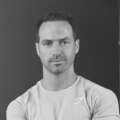
Thomas Clozel talks quickly. Very quickly. At times his thoughts seem to be generated faster than conversational language can organise them, with a new idea arriving before the previous one has been serialised.
It’s a fitting trait for a man who, as CEO and co-founder of the AI biology company Owkin, has spent years trying to make machines reason through biology at a speed that outstrips human capacity. A former assistant professor of clinical onco-haematology at Hôpital Henri Mondor in Paris, and a former member of Ari Melnick’s lab at Weill Cornell Medical College, he co-founded Owkin in 2016. He is 58th in the Unfiltered Longevity 100.
Conversation isn’t the only thing gathering pace. Since May, Owkin has signed deals with four drugmakers for K Pro, its AI scientist. AstraZeneca took a three-year licence, with Owkin building AI agents to answer its competitive intelligence questions. Sanofi, a partner since a €90 million deal in 2021, signed a five-year licence and a multi-year collaboration to co-develop agents for drug research and development. Boehringer Ingelheim is licensing Owkin’s multimodal oncology data, and Owkin will generate new immunology data for it. Servier gets access, inside K Pro, to patient data from MOSAIC, Owkin’s oncology research network.
Every one of them is European. So is Owkin’s newest partner, which isn’t a drugmaker at all. On 29 September, Estonia and Owkin announced that Metrosert, the country’s state-owned applied research organisation, will test whether K Pro can help approved researchers work with Estonian health data inside the country’s own secure infrastructure. The first phase covers selected health-data cohorts, and oncology is among the research areas being explored.
When we meet, he has just stepped off stage at HumanX in Amsterdam, one of Europe’s biggest AI summits, after an honest and creative contribution to a panel on why European start-ups struggle to scale. He was passionate about the need to build winners, and pessimistic about the continent’s ability to embrace a mindset of global ambition.
On why European start-ups struggle to scale
You’ve just been on stage talking about European start-ups struggling to scale within Europe. We could have had that talk last year. How do we avoid having it again next year?
In Europe we need companies that lead and are number one. Revolut is number one in digital banking. Lovable is number one in the field. Spotify is number one, and we need number ones, because this is what Europe needs. We need winners, and I think we don’t need winners in Europe. We don’t need — we need big ambition. And for that we have new funds coming in. It’s not only about having growth money; it’s having growth, super-courageous money to do things — companies that are going to be totally trailblazing, and that will be the biggest ones because they have the best tech, and not because they have a growing business model.
And I think we shouldn’t — suppose companies that don’t need political power to thrive. ElevenLabs pretty much doesn’t need any political power. A few other companies have been a bit breastfed by the European systems. We want companies that want to be number one. I think this is where things — we need to follow up the Revoluts of this world, the Lovables, the Spotifys. This is what I admire, and we have a lot in Europe, more and more.
You operate in Europe and the US. What’s the difference?
Yeah, the energy is different. It’s difficult to design why the energy is — the openness of people, so you can talk to anyone. It’s easy, a little bit, and just the will to thrive. It’s very pragmatic, very easy. In China it’s the same.
Just one example. If you’re a doctor — because I’m a doctor, right — in France, and you want to try a new technology for free, an AI company says, “You have this for free. Try it.” You need to fill in 400 pages of papers at four different layers. If you’re in China and you want to try — I saw a doctor, he was trying the Alibaba little robot, nurse robot, and just brings him home, tries it, and gives it back tomorrow. It’s so pragmatic, so easy. In France, Europe still has a bit of administrative sandwich everywhere to do anything at all.
You can close a deal in the US in five days. When I had Google Ventures coming in, it’s like, “Come tomorrow to SF,” and five days after, I did some shit. It was really, really fast. It never happens like this in Europe. Very early. Maybe it’s changed a bit. But it’s not exactly the same.
Being realistic, how much can change, and how quickly?
I’m a bit more worried than a lot of people. I still don’t think there is a global ambition, even politically. So Macron will never pitch Black Forest Labs, or he’ll never pitch ElevenLabs. We’re Europe. Just pitch everything. Don’t pitch any Mistral, right? And why not? If the politicians themselves don’t feel European… I’m proud of all these European companies. I pitch Legora to a lot of people, and I don’t know Max [Junestrand, the CEO] so well. Same for Lovable, whatever. So I think in the end we have to be more open about US–Europe companies. Doesn’t matter where you’re incorporated. It’s not because I’m incorporated in the US and I have everybody in Europe. I didn’t have the choice when I started the company 10 years ago. It was a different world. So I think we have to be more open. Doesn’t matter.
Are the barriers about infrastructure or culture?
Culture. Infrastructure, we have it, right? France is exporting energy. They have great data centres. We will have it. It’s more risky money. People are risky to take really, really courageous bets. And actually funds — EQT, it’s European money they have, and they’re all deploying. But it’s not the money. I think they’re also doing a really good job to make good bets, and it’s the first time we’re seeing courageous bets. I think we also need very good funds taking crazy bets. But I think it’s a cultural thing. Being faster, trying, failing — everybody says it, but it’s still true.
We also have to get out of these fundraising things. “How much did Datadog fundraise?” Nobody knows, and they’re $60 billion, whatever. And because I just did really well as a business — and you want to be a business that does really well without raising. This is the goal. And we have to get out of this “How much did you raise?” paradigm. And even the politicians say, “We raised X for the…” Doesn’t really matter, because I don’t know the mathematical relationship between fundraising and level of exit. Level of exit, fundraising — I’ve never found this curve, and I really wonder what it is in different countries, Europe versus the US. I’m not sure about it. I don’t know where it is. I’d love to see it.
On longevity hype, peptides and cancer screening
You recently said that 99% of the longevity space was BS. What’s the 1%?
It’s new biology-driven. I think what is bullshit is people doing anything that is not fresh water, fresh air, fruit and vegetables, and exercising, which is the basics. Everything else is more about — if you feel better if you take a supplement, you should do it, probably. But people take way too much stuff.
And I think new biology-driven, like Alex [Zhavoronkov of Insilico Medicine] is doing, for example, and solving organ by organ, type of thing, will be — and maybe the future of longevity is xenografts from pigs, like they’re doing with kidneys. I think it’s very interesting. It’s always a bit tailored to one topic. Everybody writes to me on WhatsApp: “What do you think about peptides?” Every day. It’s very easy: I think it’s bullshit. [Editor’s note: Clozel is referring to the peptides sold directly to consumers online, not to approved peptide medicines such as GLP-1 drugs.]
Does the hype around some consumer products threaten to tarnish serious medical work?
Yeah. I think so. Yeah, a little bit. Exactly. Peptides would be an example.
And the other one is also, in longevity, a very good way to live longer is to take the right thing, but also not to die. And so not to die is a very good advice. We all aim at not dying, and I think, in a way, what is the right check-up? This is a very important question, and there is not so much discussion about the right check-up. For example, people take the plane all the time. The plane is not good. It’s radiation, cosmic radiation, and you probably get more harm from taking the plane than from doing a lot of things in your own life. But there’s no tip. People don’t even — we should have a millisievert — we should have a dosage of your radiation every time you take the plane. That would be a very easy longevity thing. No, but I still take the plane, and I know it’s shit.
But in a way, what is the perfect check-up? If you do full-body MRI, you should do it every six months, an oncologist would say, because most cancers develop in less than six months. But nobody talks about this in the media. Everybody’s still doing a once-a-year full-body MRI, which doesn’t really work. And there is a risk of full-body MRI, which is finding something.
And to finish, once again, there is the Galleri test [from GRAIL], which I love. I think GRAIL is a fucking amazing technology, and they [went before an FDA advisory panel] yesterday, saying, “We had this sensitivity.” But sensitivity doesn’t matter at a patient level, because your predictive positive value of having a cancer depends on the prevalence, and so [they] don’t even give the right metrics. And this is — I think elevating the debate, speaking about the metrics, speaking about the studies, speaking about the rhythm of things — I don’t hear so much about it. I’m just thinking about peptides, yes or no; metformin, yes or no.
Does longevity as a category still operate too much like the Wild West?
I think ageing is the cause of many things, including cancer, anyway. Maybe longevity should be part of every — longevity should maybe be more integrated within every field. I think cancer should speak more about longevity as well. Oncology — everything should be, like regenerative medicine. I think maybe it shouldn’t be a field by itself. Not having a cancer is a great way to live longer. It’s very difficult, actually, because you see a lot of cancer, and how you hold a chronic cancer.
On AI risk, P(doom) and AI safety
There has been a lot of talk recently about the existential risk AI poses to humanity. What’s your P(doom)?
Not so high. I think I’m a very positive believer in tech, and because in my field it brings so much to patients, I can only be pro. I think OpenAI, Anthropic, these big frontier labs will be the pharma of tomorrow somehow, and I’m very positive about these improvements. There’s risks, but in cancer, in medicine, everything is a benefit-risk ratio. We always talk about the benefit or the risk. Maybe let’s speak about the ratio. And I think the benefit-risk ratio is more in benefit of the technologies.
Some people are speculating that the talk of risk may be contrived ahead of the IPOs. What do you think?
I don’t know, because I feel like OpenAI has cancelled for now, right? I don’t know exactly when their IPO will be. Maybe it’s part of the — there is a bit of a marketing thing about “this is dangerous”, whatever. But however, when you try the models, Fable or Astra is really powerful. I think they need to be made in the right ecosystem to test these models on new genomic materials. That’s very important.
We work on this, called Initiative W, trying to figure out in our network if we can test these models, to see: can we really generate new materials in genomics and viruses? I think today it’s not really, because the proof run of Anthropic was pretty small. They didn’t really do this at scale. We need to know. It’s difficult to know today: can we use Astra, Fable, to build new genomic materials? Nobody really knows, so we need to be able to write the right ecosystem to test that.
Is enough being done on AI safety?
I don’t know. I feel like — I think that they are genuinely — both Sam and Dario seem to be genuine, and Elon Musk. I’m calling them by first name, not knowing them very well, right? But I think they’re genuinely concerned about this. Not fakely, I think. But it’s a business as well. It’s difficult. I don’t know. At different levels, different layers.
At least in my field — I can only speak about biology — there should be more of a very good ecosystem of different hospitals collaborating. You need collaboration across the world to see: can we test these models with 10, 20 centres? What is the result? And it is an inter-country collaboration. For example, France has this Pasteur Institute, which is one of the best in viruses and bacteria. So I think maybe not enough. But I don’t think they are neglecting it.