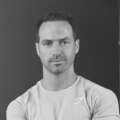
In 2021, Dr Adrijana Kekic, a Mayo Clinic pharmacogenomic specialist with three decades of training in pharmacology and personalised medicine, passed out on her kitchen floor of something preventable that her own physicians, and even her own framework, had missed.
Standard testing had been done within a week of the event. Symptoms had been present. She had read the data herself. None of it added up to the diagnosis the data should have produced.
“That really pulled the rug from underneath my feet,” she says. “How in the 21st century could a healthcare professional who deals with AI and digital twin and multiomics and all of this advanced stuff in medicine miss their own symptoms?”
From Mayo Clinic pharmacogenomics to multiomics medicine
Kekic trained as a doctor of pharmacy with additional degrees in neutrogenomics and healthcare innovation. For a decade she practised at the Mayo Clinic as one of the nation’s first pharmacogenomic clinical pharmacy specialists, the discipline of using a patient’s genetic profile to predict how they’ll metabolise a given drug.
The most-cited use case is opioid pain management. A patient on oxycodone or morphine reports the medication isn’t working. Conventional triage adjusts the dose. Pharmacogenomic triage looks at the patient’s opioid-receptor variants. The drug may be metabolising at the expected rate; the receptor may simply not be reading it.
“I see this clinically used daily,” Kekic says of the discipline, “although it’s not a standard of practice.”
What pharmacogenomics gave her was the experience of routinely finding clinically actionable information in places the standard-of-care wasn’t looking. Multiomics, the layered analysis of proteins, metabolites, epigenetic switches and the microbiome on top of the genetic code itself, was the natural extension. She moved into it during her last years at Mayo. She has since founded Futurome, her clinical practice, and joined the faculty at the Geneva College of Longevity Sciences, a postgraduate longevity degree where she teaches the principles of peptide compounding among other modules.
Why the standard blood test misses what multiomics finds
The substantive position Kekic argues from her clinical practice is that the past three decades of biomedical funding have over-indexed on genetics and under-indexed on what sits downstream of it.
“We have been overly focused on genetics for the past couple of decades — well, actually more than that, probably three decades,” she says. “A lot of funding has gone into that, and we do not have a whole lot that’s really earth-shaking to show for it yet clinically.”
This is a contestable position. Whole-genome sequencing has produced clinically meaningful outputs in rare-disease diagnosis, polygenic risk scoring is in routine use in cardiology research settings, and CRISPR-based gene therapies are being explored. Kekic’s argument isn’t that genetics has produced nothing. It’s that the marginal clinical return on the next dollar of genetics funding is now lower than the marginal clinical return on the layers underneath; proteomics, metabolomics, epigenetics, and the microbiome, which she points out accounts for 99 per cent of the genetic material a human carries.
What this looks like in her practice: a patient comes in with a clean standard-of-care workup. No diabetes, no cardiovascular markers, no obvious oncological signals. The standard testing has not lied; it has simply asked the questions it was built to ask. Multiomic testing – metabolomics, epigenetics, proteomics, several biological age clocks – asks different questions of the same biology.
“We’re starting to see a whole plethora of things that are going in the wrong direction,” Kekic says.
The Parkinson’s case her testing caught when neurology missed it
The clearest illustration in her practice is a patient who had been treated for essential tremors for three years on anti-seizure medication, with very little improvement. The diagnosis had come from a neurology workup. The treatment was standard. The patient was getting worse.
Kekic’s team ran multiomic testing. The microbiome signature, she says, was unambiguous. The patient had Parkinson’s disease. The patient was referred back to neurology — at one of the leading institutions in the United States, Kekic notes — and the Parkinson’s diagnosis was confirmed.
The cost is the part that stays with her. “She lost three years minimum of that time where we could have had more nuanced, personalised and precise strategies for her.”
The microbiome signature of Parkinson’s is a live area of research; gut-microbiome changes precede the motor symptoms of Parkinson’s by years in much of the published literature, and the gut-first model of Parkinson’s pathogenesis has been gaining ground since the late 2010s. Kekic’s case study is one practitioner’s account of one patient. It is not a clinical trial. What it is, in the architecture of her argument, is the answer to the question her 2021 kitchen-floor event raised: what could the testing have caught if anyone had thought to ask it?
The driver’s-seat framing of preventative medicine
The framework Kekic builds from these foundations is what she calls cellular intelligence in action, a layered systems-biology approach delivered through six lifestyle pillars (nutrition, movement, sleep, stress, relational health, emotional wellbeing) plus a sixth she names substances and where she spends most of her time. Substances in her usage covers supplements, peptides, medications and exosomes on the active side, and processed food, toxins and “anti-food” on the costs side. The architecture is recognisable from the broader lifestyle-medicine literature; the AI-enabled multiomic measurement layer is where Kekic’s version differs from the standard six-pillar framing.
Where she takes the framework next is less institutional. Her tagline, she says, is know yourself. “We cannot live in a state where we defer our health to something or somebody. We need to be at the driver’s seat of our health.”
The vision is for the next decade of preventative medicine to look less like patients receiving guidelines from physicians and more like patients arriving with multiomic data and asking better questions of physicians who have been trained to work with it. Preventative, proactive, participatory and what she calls uber-personalised.
This is the position the 2021 event ended on, and the one she has spent the four years since building around. Medical knowledge doubles, she points out, in less than two months. No clinician can hold the field in their head anymore, and no patient can outsource the question of their own biology to a clinician who can’t.
What Kekic doesn’t say, what the kitchen-floor moment doesn’t allow her to say, is that any of this would have caught what her own training missed. Three years for the Parkinson’s patient. A week of standard testing for Kekic herself. The framework doesn’t promise the catch. It promises that someone was looking.
Photography TSD Studio