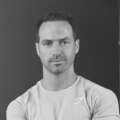
The most interesting consumer health products in 2026 are not the ones adding new sensors. They are the ones removing them. The wearable category has spent a decade convincing people to put hardware on their wrist, in a ring, on their chest. The next move, if it works, is to take the hardware away entirely and do the measurement on the device the user is already holding.
YOU(th) is one of the companies influencing that move. The startup has built a platform that uses smartphone sensors (front-facing camera, microphone, keyboard, accelerometer) to create a panel of biomarkers including blood pressure, heart rate variability, cognitive age and proxies for HbA1c and cholesterol. The check-up takes under two minutes. The pitch is friction reduction that makes behaviour change easier and more likely.
The company recently closed a $4.5m seed round led by Callisto Health, with participation from caesar., adesso Ventures, Antler, Moonstone and 1024 Ventures. Founder and CEO Filippo Nigro has so far spent his career intentionally cycling through business, product and technical roles before starting the company. His hope is that smartphone-derived biomarkers can do for preventative screening what continuous glucose monitors did for diabetes management: collapse the friction so far that the screening happens whether or not the user actively chooses it.
The conversation below, recorded at the Health Tech Global Summit in Basel in March 2026, shortly after the funding closed, covers the science underneath the screening (remote photoplethysmography and the RGB-light patterns that make it work), the two-agent system YOU(th) is building to separate health recommendations from adherence engineering, the proof points the VCs wanted to see, and Nigro’s personal interest in longevity escape velocity.
How do you describe YOU(th)?
In simple words, we do a full health check-up from a smartphone in less than two minutes. We collect different data inputs from smartphone sensors — face video, voice recording, eye pictures, pictures of the skin, typing patterns, accelerometer data and step data. From this data input we can predict things like blood pressure, heart rate, heart rate variability, respiratory symptoms, facial skin biomarkers, cognitive age, cognitive health and more.
What’s the most impressive thing you’re able to do?
Probably detecting proxies for HbA1c, glucose and cholesterol just from face video and eye pictures.
How does that work?
We use multiple technologies. One of the main ones we use, which is also quite well known in the market, is called remote photoplethysmography. We analyse RGB light reflection and absorption patterns in the blood vessels underneath the skin of your face.
To give a basic example: when your heart pumps, more blood flows through the veins underneath your facial skin. When your heart is at rest, there is less blood flow. Different blood flows create different patterns of light absorption and reflection. Based on those patterns, machine learning can understand the condition of the blood vessels and infer things like heart rate. The standard deviation for this technology is around 0.5 BPM compared with an ECG, so it’s quite accurate.
What can’t you do now that you hope you’ll be able to do in the near future?
At the moment we cannot diagnose conditions. The tool is used as a pre-screening tool and to monitor trends. It’s similar to a wearable in that sense, but more comprehensive.
In the future we ideally want to reach a diagnostic level so that we can escalate and provide medical recommendations. Another thing we can’t do yet is make screening fully passive. Our goal is to move all screening into a passive mode.
If you think about the behaviour model — behaviour equals motivation, ability and trigger — right now the ability to do preventative screening is quite low. You usually need hardware or a clinic visit. Our goal is to cut friction and massively increase the ability for people to screen themselves, even if motivation is low.
Today the check-up takes two minutes on a phone. The ideal scenario is that friction goes to zero and screening happens as you live. You unlock your phone, take selfies, send voice messages, type messages, use your laptop for meetings. You are constantly generating facial, voice and typing data. From that, you could perform preventative screening continuously just through normal device use.
What’s the key to actually influencing behaviour and getting people to act?
Again, friction is extremely important. You need to reduce friction as much as possible.
If you remove friction from the screening itself, you get a lot of biomarkers. But then another form of friction appears — cognitive friction. The user might think, “Okay, I have all these biomarkers. So what do I do now?”
Our goal is to make the output very simple and digestible. Out of all the biomarkers we measure, we prioritise one key biomarker and then provide a specific action plan to improve it.
But action plans are also complex. Everyone wants an action plan, but very few people follow one. That’s because it needs to be highly contextualised to the user’s preferences and routine.
So we try to collect as much context as possible about the user — goals, food preferences, activity levels — and then recommend the best dietary and exercise options. What we’re also working on is using machine learning not only to generate recommendations but also to optimise adherence.
One system focuses on generating the best health recommendation. Another agent focuses purely on adherence. That agent should know when the user finishes work, whether they prefer vegetables over meat, whether they are more likely to act in the morning or afternoon. It tracks behaviour on and off the phone and provides the right notifications and recommendations to maximise adherence.
You’ve just raised $4.5 million. What was the key to securing that funding?
I think it was a strong vision, a strong team and, above all, proof points and traction.
What were VCs asking you to show?
You need to show proof points and commercial traction. The best validation you can have is paying clients and signed contracts.
We were able to double our signed annual recurring revenue and monthly accounting revenue every quarter. That demonstrated growth and traction.
Beyond commercial traction we also showed what you could call value traction. Clinics and business partners using the app saw return on investment and strong engagement metrics, which proved the value of the platform for their users.
You’ve done a number of different things in your career. What lesson from earlier experiences have you applied to what you’re doing now?
My career path was quite intentional because I always wanted to start my own company. I tried to build different types of knowledge — business knowledge, product knowledge and technical knowledge.
I worked at a very early-stage startup as a business development person. Then I worked at another startup as a product lead, which eventually went public. Later I completed a machine learning engineering degree.
One of the main lessons I learned came from mentoring sessions with the founder and CEO of the startup that went public. The biggest lesson was to focus on very strong people.
Another lesson relates to product development. Many teams overthink product roadmaps and over-engineer them. They spend too much time planning and not enough time shipping. In reality you need to ship as quickly as possible and stay flexible with your assumptions and roadmap.
On a personal level, what interests you most about what’s happening in longevity?
My personal mission is quite extreme. Ideally, I would like to reach longevity escape velocity.
That’s the concept where, for every year you live, science adds another year to life expectancy through technological progress. In theory that would make biological immortality possible.
To achieve that we probably need two things. First, a scalable and accessible measurement layer, because you need to understand what’s happening in your body in order to act early. That’s the layer we’re building with smartphone-based screening.
Second, we need biotech breakthroughs. With current technology we cannot really reverse ageing yet. So I’m very interested in more radical biotech interventions, like epigenetic reprogramming, stem cells and other emerging longevity technologies.
Photography Amanz