Longevity is dominating the cultural and scientific zeitgeist as a health domain, spanning serious medicine, lifestyle optimisation, speculative biotech and cultural fantasy. Everyone wants more years but not everyone is prepared to talk honestly about what those years actually require.
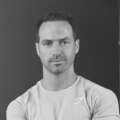
Dr Elisabeth Roider is an exception. When the physician-investor discusses longevity, she doesn’t start with stem cells, gene editing or the promise of living forever. She starts with diagnostics. Bloodwork. Genetics. Glucose. The data that tell you what is actually happening inside your body.
At HLTH Europe in Amsterdam, Roider described longevity as a pyramid. At the base sit diagnostics and lifestyle. Above that, supplements and devices. Only at the very top do the technologies everyone loves to talk about appear. Stem cells. Gene editing. Mitochondria. The things that dominate headlines but represent, in her words, maybe five percent of what really moves the needle.
What recent breakthrough have you seen in health that has been incredibly interesting to you?
I do think it is longevity. That’s also what we see at this conference here. If we define longevity as healthy ageing, I think there are multiple layers of what we speak about when we speak about longevity. I often introduce the concept of a pyramid here.
We start with the basics: diagnostics. Even here, we have a lot of innovation. If we look at the conference, we see platforms that are able to track and trace what’s going on, and really look very deeply into what’s happening on the genetic and epigenetic layer, bloodwork, and new markers coming out.
All of these have actionable insights. We may speak equally about mutations or risk of Alzheimer’s dementia and many, many others. In that sense, it’s really about understanding what’s happening in your body from a blood side, from a tracing side, glucose monitoring, and so on. I think that’s one level.
The next level I always address is the lifestyle area. Here we speak about exercise, sports, nutrition, and sleep. We just heard a speech from the CEO of Oura. They’re doing fantastic advancements where they apply nudges, including level-based coaches, to help individuals move on and really implement the things they maybe already know into their daily life.
Of course, now we as scientists bring in more rigour and more understanding of what’s really true in that space, because before it was always a bit vague.
The next level I see is supplements. There are multiple companies on the market providing supplements that are not only substituting deficiencies, like iron and vitamin D as we had before, but now it’s really about enhancing pathways that enable you to live longer and live healthier.
On the tech side, I see a lot of devices coming out, from mental health devices to performance and sports. At the next level, it’s really important to understand what risk appetite we have and how much security we want to have with some of these things.
For some, there is clinical trial data in humans; for others, only animal data. So it really varies. What we see now is the adoption of devices such as HBO and IHT on the mass market, because from sports medicine and performance medicine there is a very clear body of evidence.
On the mental health side, there are very cool technologies enhancing that as well.
Then I often speak about off-label use of drugs and medications. There are a couple on the market: metformin, rapamycin, GLP-1 agonists. The hottest kid on the block for me is definitely the GLP-1 agonists, like semaglutide.
On the one hand, of course, the more weight you lose, the better it is, because you reduce joint problems, dementia risk, and cardiac problems. But they also address pathways that are relevant for longevity.
At the next level, we have different drugs coming out. We have totally new abilities to generate drugs, synthetic, AI-based drugs. We see some of them coming out, but they’re not on the market yet.
And then, of course, what we always love to talk about is stem cells and gene editing. Personally, I love that space, but it’s important to mention that this is the tip of the pyramid. This is maybe the top five percent where we really do something. But of course, it’s extremely relevant.
Stem cells, in my opinion, are extremely interesting because if you address the whole body, that’s something where you can do a lot. Mitochondria are an extremely hot topic, because energy supply is very tightly connected to how well we age.
We also saw this in the talk from the space agency, how stress signals really impact that. So on the scientific side, stem cells, mitochondria, and gene editing are really the technologies that provide the most benefit.
On the consumer health side, it’s really about the implementation of existing technologies and existing solutions into healthcare.
How would you like to see stem cell therapy develop from here?
The question with stem cells is always which stem cells for what indication, and for which application.
What we already see on the mass market are skin-based solutions. We have PRP, where you take your blood, filter it down, concentrate specific markers, and inject it into the skin.
There are exosome-based solutions, which are very closely connected, that are also brought into the skin. A lot of the innovation we see first appears in the skin space and then moves into the systemic space.
If we really speak about stem cells, there are stem cells we can take from fat, stem cells we can take from bone marrow, and stem cells that are our own or from other sources.
Of course, these stem cells change. Some circulate in the body for a long time, but unfortunately they age with us. That’s the problem. That’s why people would love to bring in young stem cells and young signals.
The trend is moving towards rejuvenating our own stem cells, because it’s ethically better, easier, and more feasible, and then reinforcing those. That means taking them from an easy source like fat-derived mesenchymal stem cells, rejuvenating them, and bringing them back.
On the allogeneic side, there are people in the Caribbean offering that. I’m European, and most of my colleagues here are European or American, and we don’t have that for valid reasons.
For now, I would try to stick with the solutions we have in the countries where we live. If things develop in a positive way over the next decade, we’ll see how that evolves.
Where might we end up? Could you describe a future scenario where stem cell therapy would be commonplace?
There is the concept of escaping longevity velocity. There are books about that. I’m not a big fan of saying we will live forever, but it’s an interesting thought to play through.
Where it comes from is the fact that biology follows rules, mistakes, and errors, and those can be addressed. We have drugs, genetic modification, rejuvenation, and so on. If one were really able to address all of those, then ideally we could maintain a perfect system.
I often compare it to a car. A car also ages, but if you maintain it well and take care of all the things that happen, you still have an old-timer. It’s still an old car, but it’s a very well-functioning car.
In that sense, what I often say is that lifespan follows healthspan. The first thing we do is stay healthier for longer, so we have more healthy years. Then, automatically, lifespan, the number of years, increases.
I also get the question of whether I believe in infinite life. Probably not. I think that’s more of a theoretical construct. But that we are able to really lift the quality of life we have with the technologies we have, I very much believe in that.
With all these innovations I mentioned before, and the arms and angles where we can address them now, including AI and generative AI coming in, feeding novel technologies, I see an exponential increase in innovation, not only in healthcare, but almost in general.
So the next ten years will be very exciting.
We’ve spoken to Aubrey de Grey, for example, who’s quite optimistic about our ability to live considerably longer. What do you think might be the reason that we don’t live forever? What do you think will be the determining factors, and why?
He’s a good friend of mine. He’s on the board of Maximon, which I co-founded. Our backgrounds are different. I’m a doctor by training and a scientist by training. Aubrey, I think, is a mathematician.
So one approach is very technical, and the other is more medical and biological. I’m not saying what he extrapolates is impossible, but I think it’s a highly complex system.
Even if you have the insights and know exactly what it is, you still need to generate the drugs, the modifiers, whatever is required, at the right time to address all of that.
It’s not only innovation that increases exponentially, ageing does too. So you would need to intervene very, very early. But nobody knows.
There are things we can do now that people ten years ago would have thought impossible and beyond our ability. For me, the big shift is that we now think about ageing as something that can be addressed.
Before, it was seen as normal, you get old, you get grey hair, you have menopause, you get joint problems. Now we say it doesn’t have to be like that.
The flip side is that this puts responsibility on people. It becomes, “Why didn’t you do that? You should have done that.” But on the other hand, it enables and empowers people. You’re not just waiting until you die. There’s something you can do.
This mindset shift is extremely important.
From a practical side, I would recommend seeing a longevity physician or clinic. Which providers to trust is another story, but there are more and more offering these services.
Then there are lifestyle interventions, supplements, which are relatively easy to do. There are things like IHT, HBO, and possibly some drugs if you choose to do that.
With these, you’re in a very good position to avoid many of the chronic medical problems we face, such as diabetes and obesity, which are some of the biggest threats to health.
In that sense, I’m optimistic about what we can do now. In the meantime, I think we need another five to fifteen years for these more exciting technologies to move from exciting to mainstream, and then to be replaced by the next wave.
You work closely with startups. What common denominators do you see in the ones that tend to be successful, in the longevity space or more generally?
I’m a scientist, and I used to think that having a great idea meant it would succeed. I’ve learned that a great idea does not necessarily mean success.
I’ve seen fantastic teams with mediocre ideas be extremely successful. So it’s a mix. Ideally, you have a fantastic team and a fantastic idea.
A great team believes deeply in what they’re doing and wants to move it forward, but it also needs to match the market.
In healthcare and science, I always start with a real clinical need. Not necessarily a disease, but a challenge people have. If you identify a real unmet need, things evolve naturally.
It can be consumer health or biotech. If you have a core problem you’re addressing and solid execution, that’s a very strong foundation for success.
What about businesses that are so forward-thinking that the market hasn’t evolved yet? Is it possible to predict which of those will succeed?
We see that quite a lot. When I started more than three years ago, I was asking myself whether going into this field was a credibility risk. I believed in it, but I wanted to do it right.
Doing it right takes time. If the market isn’t there yet, there may not be enough investor trust, guidelines may not be in place, and the market may not be big enough. Startups in that space have a very hard time unless they have governmental, non-dilutive funding or academic support.
That’s one reason I remain an academic. It gives freedom to operate in very early-stage areas. We also saw this on a panel this morning. Many colleagues focus on consumer health because that’s familiar and where the mass market is. Cutting-edge technologies require deep insight.
The challenge is communication, explaining clearly why this is the right thing and the right market. That requires a lot of talking, which can be exhausting.
You can succeed and become very big, but the risk is higher. Traditional methods, especially under an academic umbrella, can buy you time.
Final question: what advantage does having a medical background give you when it comes to investing?
Having a medical background is a great asset in investing. It helps you understand patient and consumer needs and identify what the real problem is.
It also allows you to speak to people on the same level. Medicine is a close society, and doctors are cautious about trust. The same applies to science, there’s deep expertise required to really understand what’s happening.
From the medical side, I can understand the problem, how people think, what scientific rigour is required, and how to validate that something is real.
Then you bring in the business side, why it’s valuable and how to communicate the full story.
For more on Dr Elizabeth Roider, visit Maximon. For more on HLTH Europe, click here.
Photography Google Deepmind