The world’s most private longevity investment conference takes place in Switzerland next month and you are not on the list.
Don’t take it personally. Hardly anyone is.
Between the 14th and the 17th September approximately 140 people will gather in Gstaad for the annual Longevity Investors Conference. One third of them are speakers. The rest are capital allocators.
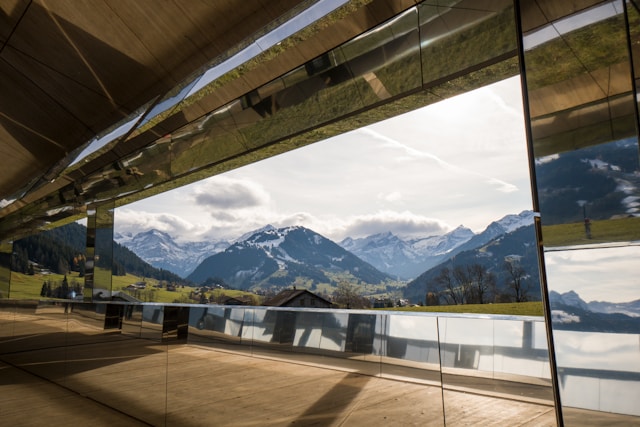
The guest list is intentionally short and the location deliberately inconvenient. The nearest international airport, Geneva, is a three-hour train ride away. Saanen Airport, which accommodates private aircraft, can be reached in minutes.
Tickets are by application only and the premium package, which includes a hotel suite, introductions and longevity services, will set you back CHF 11,900 (£10,900), exclusive of VAT and service fee.
The luxury trappings, however, are immaterial. “It’s not about a fancy, traditional five-star experience,” says conference co-founder, Marc P. Bernegger. “Our guests know about caviar and expensive champagne, so you can’t impress them by having another expensive bottle.”
Instead, he escorts attendees up the mountain in chairlifts to mingle with cows, eat local cheese and enjoy traditional Swiss music and song. “The secret sauce is, especially when you have a very demanding, wealthy audience, that they experience something more than just going to another event.”
That’s why some sessions take place at the Gstaad Yacht Club rather than “a dull conference room”, which makes perfect sense until you remember that the resort sits at an elevation of 1,050 metres and is nowhere near the sea.
The club’s ambition was to “create a unique global yacht club away from the waters, instead of another local club by the waters.” It’s fitting, then, that attendees plotting to rip up the rules of ageing will do so at a club undeterred by the laws of geography.
Where longevity investment goes next
After launching the Crypto Finance Conference in St Moritz in 2018 (the ticket price was three bitcoin, worth about $6,000 when they first announced the event and about $230,000 now), Bernegger and co-founder Tobias Reichmuth repeated the format – “investors only, no service providers” – with longevity.
Exclusivity and intimacy are key ingredients. “We, by design, don’t want to grow,” says Bernegger. “We don’t want to become big or dilute. Startups go through an application process where a jury of scientists selects the most promising ones. So it’s really different to most events, because normally when you go to these bigger events and you have the investors badge, everybody is pitching you and wants your money. In our case, it’s the opposite.”
Speakers include Dr Nir Barzilai, who directs the Institute for Aging Research at Albert Einstein College of Medicine, and Altos Labs principal investigator Dr Steve Horvath, both of whom featured prominently in the recent Unfiltered Longevity 100, the field’s first ranked investment power list. “I wouldn’t do an event just because I need to organise another event,” says Bernegger. “It’s really about exciting topics which are of interest to myself.”
On the agenda for 2026 are space-grown drugs and lab-grown human biology. Both will be explored in a session called “From Science Fiction to Science Fact: Longevity’s Boldest Bets”. The panel includes Dr Michael Levin, the Tufts University biologist examining the body’s bioelectric code in an effort to regrow tissue and rebuild anatomy. Alice Gilman, co-founder of R3 Bio, growing human biology from stem cells as part of the frontier of regenerative medicine. Dr Jonathan Anomaly, co-founder of Herasight, working on polygenic embryo screening and the genetics of human traits. And Yossi Yamin, founder and CEO of SpacePharma, which runs automated labs in orbit to explore what can only be possible in microgravity.
Space-grown longevity drugs will, of course, need their own orbital infrastructure. Bernegger anticipated that too and launched the Future Investments Circle during the World Economic Forum at another Alpine resort, Davos, in January. It covers nine investment verticals, including neurotechnology and brain computer interfaces, quantum computing and the space economy.
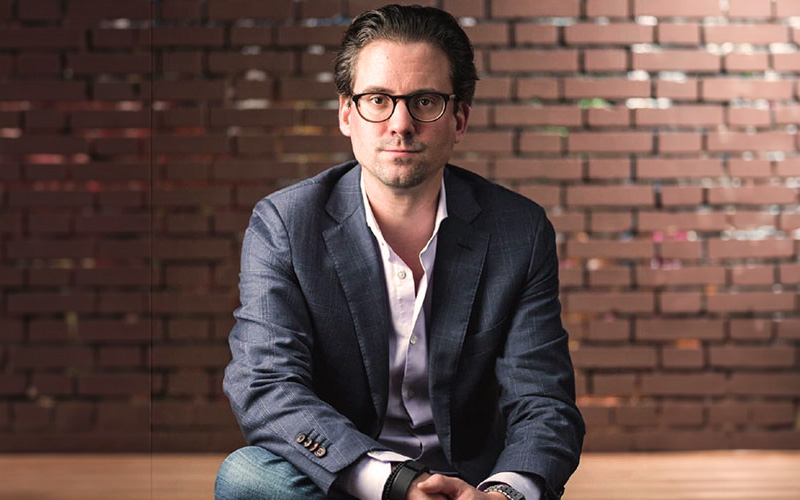
Whether it is a yacht or a spaceship, whatever Bernegger (below) turns his attention to is worth tracking. We spoke to him as he was gearing up for conference take-off.
Does this year’s conference have a defining theme?
For us, it’s always a little bit of a challenge because we have, as you can imagine, many guests. They say your event is the time I invest three days flying to Switzerland and then I know again what’s the latest in longevity, what are the latest developments in science, but also as an investor where maybe the exciting things are happening. And then on the other side, and that’s also something we want to attract, we have many people, they’re literally for the first time ever digging into longevity as an investment topic.
Because as you also elaborated in your report, it’s still an emerging field and I would say it’s not an asset class like AI or an investment field like AI, where now every family office has a certain allocation. And that’s why content-wise, we on the one side still have to explain to a certain extent the basics. But then on the other side, naturally we also have to always maybe bring some a little bit more exciting, more niche, not yet mainstream topics. And that’s also mainly part of the curation.
We have so many very well-known speakers, but we can’t just invite them every year again, because even if there’s something happening in between, we want to see new faces.
And I would say this year, what’s definitely interesting — we have for example somebody from Nestlé sitting on a panel with somebody having the patent of an NR and Niagen.
I would say such a panel would have been impossible just two years ago. That you have a representative of one of the biggest companies, Nestlé, and he deliberately said, yeah, let’s do a panel with one of these longevity supplement providers, or literally one of the most famous ones. So they chose a little bit that many of the — I would call them taboos — we in the past were having issues to somehow combine it but now it is becoming something you can really discuss on stage. And this is, I would say, for us also an indication how the space is evolving. Because now you can have Nestlé and the longevity supplement company on stage and it’s at the level where the audience gets some valuable insights.
How would you characterise the consumer longevity offering as it stands? Some people feel there’s a gap between the excitement and the impact.
That’s definitely a valid point. On the other side — and again, that’s just the example of this panel — that you now have a very relevant representative of Nestlé willing to talk about one of maybe the most hyped, let’s call it, longevity streams, meaning supplements. And especially now with NMN, NAD+, where you would still argue there’s no single proven evidence [that it slows ageing]. Let’s just state it as some people would say it. Shows a little bit that maybe now even you don’t have all the 100% proven results yet, that the bigger players are now seriously looking into all these fields. And I think, as I mentioned before, this is something which didn’t happen two or three years ago.
I remember I was in Riyadh at the conference organised by Hevolution, this big Saudi investment arm. And the day before I joined the panel, they told me, hey, we know we have this supplement business, but please don’t mention supplement in any sentence, because we are a serious conference and it’s about longevity science. And supplement is something which has nothing to do with serious science. So there you can see a little bit how quickly the narrative changes.
That’s why I’m going back a little bit to your question. Naturally, it’s very broad and we could do a whole conference only about longevity clinics. We have so many inquiries. This is also something we normally have to curate. This year we have a representative from Singapore with his clinic. Literally it opened just a few weeks ago, because there, as you can imagine, we target wealthy individuals and they’re a great match for all these clinics. I think we had more than 20 or 30 clinics reaching out to my team to somehow be involved at the conference. So the clinic field naturally is maybe one of the most obvious ones.
And then for us, because we really tried to focus on longevity, we don’t go too much into, let’s say, the Oura rings and Whoops of the world. Very relevant, very big business. I think also one of the main triggers for longevity ultimately, because you start somewhere, meaning with your tracker, and then two years later you do the crazy peptides or whatever. But because we somehow don’t want to become the Wellness Investors Conference or the Health Investors Conference in general, we to a certain extent limit a little bit the scope of the content we are covering.
But in general, I think really to a certain extent what you asked, the convergence of the very conservative traditional world and sometimes to a certain extent snake-oilish emerging one. And hopefully we can sort out and identify what stays snake oil, and this shouldn’t be somehow too prominently visible, and the rest of the based on science and data ultimately should become or get the visibility and traction it deserves.
Longevity is having a moment. But the timeline at the frontier is uncertain and most of the benefits are long term. Is it inevitable that the interest continues, or are there things the industry needs to watch out for if it doesn’t want that to dwindle?
I think there are a few, let’s say, tipping points. Or let’s say game changers. And one is naturally now the first therapy about rejuvenating cells, this first human trial of reverse ageing drugs, where you have now for the first time in human history literally a regulator looking into a new drug which is fully focused on cellular reprogramming and rejuvenation.
This is something, when you talk to early longevity scientists, that’s something where some people were waiting for in the last 15 years. And now because there’s so many things happening and it’s all over social media and peptides and supplements, some people forget that this is maybe one of the biggest breakthroughs in the short history of longevity.
So that’s why I think on the one side you have unfortunately far more noise, and also much maybe snake-oilish and irrelevant developments. But on the other side — and that’s why going back to the science and the foundation of everything — you have now really some breakthroughs. Also all these AI companies now starting to focus on health. And I think maybe that’s part of the development that because somebody’s becoming bigger, you have more noise. But I would say the signal, or the relevancy of the relevant signals, is increasing massively. So that’s why at least when you look a little bit at the foundation of this whole industry, we are by far in the most exciting time.
And now hopefully we don’t have too much of noise and dilution, because you can now also make a lot of money as soon as it’s labelled longevity. But that’s why I think we’re still far from the same excitement than we have in other industries, like especially AI at the moment. But I think as soon — just imagine the moment where you have a drug where you can FDA-approved reprogram and rejuvenate human cells. This is then the ultimate game changer where maybe everybody was waiting for, without really knowing that you were waiting for this breakthrough.
What do you think’s happened in the last year or so that is most consequential for longevity?
I would say exactly what I just mentioned. That you now have a fully regulatory stream of something which is purely ageing and longevity related. This ER100 development.
Where are you seeing some serious money moving into, and where are you seeing it moving away from, in longevity?
On the one side, I think like with Life Biosciences now having the chance of getting ageing drug. The longevity pill will unlock massive capital. And it’s honestly also something we’re already seeing. I mean if you look at the funding rounds, we recently published something about all the highest funded companies. That’s a big game changer. So I think we move from more like business angel kind of passionate investments into something where it’s really all about big money returns and you attract a different kind of investor audience.
Who do you think’s invested particularly well in longevity so far?
Good question. I think personally that when you look at the convergence of health, longevity and AI, naturally I’m quite sure that some of the money which went into Anthropic, OpenAI and all the big ones is ultimately now poured into health-related developments. And that’s why, and I don’t know if the valuations of all these companies are justified, but if just a small part of all this money helps ultimately to decode ageing based on all these AI breakthroughs, maybe then you have the biggest use case of AI, and maybe then you can say that all of this AI money to a certain extent will then also leverage on the longevity breakthroughs.