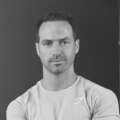
Most former IFBB Men’s Physique competitors do not talk on the record about why they stopped competing. Steve Cook does. The conversation below, recorded in January 2024, when Cook was 38, is his retrospective on the trade he refused to make: the four-or-five-compound stack required to win at Olympia level, and the realisation that becoming someone who privately took five compounds while publicly preaching health was a contradiction he could not stand inside.
What sits beneath the disclosure is the harder question. Cook spent more than a decade making his body the centre of his public identity. He won shows. He travelled the world for Optimum Nutrition and Bodybuilding.com. He built a coaching app and a 2.5-million-follower Instagram presence on the back of looking the way he looked. And then he stopped, not the substances entirely, but the trajectory. The next show, the next compound, the next placing. The thing he names most clearly is not what he took. It is what it cost him to find out he could not keep going.
The interview ranges from the post-show loneliness of LA Sundays through the mechanics of a “pharmacy race” he refuses to judge anyone else for joining, to the question of what he tells the young men who DM him asking whether they should start. What is most distinctive is what Cook will not say, that the men who took the other fork made the wrong choice. He is clear about why he made his own. He is just as clear that the choice does not generalise.
On building a body that became an identity
As someone who has not only been an influencer but has been on a bodybuilding stage where external validation is literally what you’re chasing, how have you managed to navigate the last 15 years where you are being criticized or complimented for your body?
I’ll be honest and say it feels good when someone comments, oh my gosh, I love this about you. Everyone wants to have a compliment. But I think it’s where you put validation. I’ve gone through the pendulum of putting too much of who I am self-worth-wise on those physical looks, on winning shows. But what happens is just as easily as it’s given to you, you get second place in a show, third place in a show, all of a sudden you start feeling bad about yourself.
I talked to so many people, they’re like, I just wanna compete until I get a pro card. And I’m always kind of like, compete to get a pro card — you’re gonna get that pro card and you’re not gonna feel any different than you are right now. Yes, there’s that, oh my gosh, I did it, that 24 hours of euphoria, you still got to wake up on Monday and go to work. You still got to wake up on Monday and realize, okay, that goal I’ve conquered, that mountain — now what?
And I can tell you some of my loneliest moments, I think, when I was living in LA and I was winning shows, showing up the next day, being a Sunday after a show, and being like, okay, I got nothing coming up in my life immediately that I’m training for. And I would binge eat. I would feel lonely, because again, those goals that I thought were going to be the end-all be-all, I was gonna make it to the top of the mountain, they’re never as good as you think they’re gonna be.
That was for me why I had to stop competing. My overall goal was to be very, very healthy. Now people are like, well, what do you mean, Steve? You’re 4%. That’s not healthy. So I had to kind of take a step back and say, okay, my identity and actually competing are conflicting with one another. And that was a tough thing to do.
If you ever look back at pictures of you when you were younger, do you ever think, my God, I’m in amazing shape, but you know at the time you weren’t happy?
All the time. I’m constantly looking back. I remember my brother one time, who has never been big into lifting — I said to him, I think I was a little fluffy after a show, I said, oh my gosh, I feel — I don’t know if I said the word obese or overweight — and he just said, you make other people feel awful when you say stuff like that. And he might have said, when you say shit like that, that is stupid to say. Getting back, 99.9% of the population doesn’t look like that. They would kill to look like that. And here you are kind of belittling them by saying things like that.
It made me realize real quick that we live in these echo chambers on social media. I follow all of these super fit people. They’re always posting pictures of their magazine covers or their competition. So you think everyone else in the world is living at 5% body fat. And it’s just not the case. When I came in and took my top off, I can guarantee you inside I had some angst — because you always are comparing yourself to that stage-level four percent body fat. But it’s one of those things that over time I’ve just realized, like, this is who I am. When your identity is more than your physique — when a big part of it’s about health — then it becomes, I’m more than just this physical body that I have.
Alongside the body dysmorphia, disordered eating patterns seem to be very common. Can you talk about any issues you might have had?
I can remember not knowing how to eat if I wasn’t looking at a clock. Every two and a half, three hours I had a meal, I had the same types of food. I remember getting done with the show or not competing for four months and being like, how do people just make a sandwich in the middle of the day when they’re hungry? Like, how do you just eat when you’re hungry? That’s such a weird thought to me. I’ve done this for five years. Eating when I’m hungry and not on a clock was so foreign to me.
I think the biggest thing that I had to come to terms with — one slice of pizza is very different than a whole pizza. And that was kind of my mindset. It was all or nothing. I was either 100% on my diet, or I would have a bite of something that I deemed bad, and the floodgates open and I would binge eat. I think that’s what I see a lot of people doing, because they label this good or bad and they put so much guilt — this self-guilt that we impose on ourselves, whether it’s religion sometimes, whether it’s eating, whatever it is. Usually it is way more harmful than the act that made you feel guilty in the first place.
On the steroids he took, and why he stopped
I’m gonna mention the Liver King, as someone who was recently exposed for claiming to be natural but has been using. Do you find that as well? There is a disconnect between what is a realistic body someone of a certain age can attain.
I had a buddy probably two and a half, three years ago say, do you think the Liver King’s — he’s so adamant about it. I’m like, it’s not even a question. I would bet everything that I own on the fact that the Liver — just based upon skin and what I know from competing. Now there are some genetic outliers out there — professional athletes, we look at them, they have unusual amounts of muscle to body fat. I do think there are some genetic outliers, but for the most part, yes, it’s very easy.
If I see someone on steroids, I’m not going to ever judge them unless they’re out there preaching that they’re natural. And I think that’s probably the issue, like the Liver King. He was so adamant that he was natural, and that’s going to come back and probably bite you in the ass. I’m natural right now. And what I say is right now — I’ve taken TRT in my life. I’ve taken substances I wouldn’t claim as natural. I did pro hormones when I was in college. It was over the counter. They were just as nasty as steroids. So this idea of what is natural is also — there’s some gray areas now with SARMs and peptides and things like that.
Looking back on that time when you were using, how influential do you think the performance enhancing substances were in terms of your bodybuilding career? And would you go back and not do them?
I played college football. We were tested. I did natural bodybuilding. We were tested — polygraph and urinalysis. And then as I got into the competing world, into men’s physique on that Olympia stage, it became very apparent early on that you’re not going to be able to win these top-level shows. It’s not an even level playing field, because there’s guys that are taking four or five compounds. And that’s inevitably when I decided to quit competing, because I felt like if I’m doing all of this stuff to be competitive, I then lose my identity as someone who preaches health.
Because I’m the type of person I am, with my competitiveness, I would have wanted to push the envelope. If I decided, hey, I’m gonna jump into this, there’s no doubt in my mind that I would have been able to compete at the highest level and maybe won some shows. But I would have had to be on those three, four, sometimes even five compounds. Because you have your testosterone and then you have cutters and you have all of these different substances in your body that, again, we celebrate people that do that. It is a combination of super-duper hard work, but it’s also — it is a pharmacy race too. It is who is responding to what.
Ultimately, for me, it didn’t help me create this person. It wasn’t part of my long-term goals, who I identify with. Because at the end of the day, I couldn’t be healthy.
How hard did you push the envelope, Steve, if I can ask that? And how quickly did you notice a change in your physique?
It started off with over-the-counter pro hormones. In Utah, these gyms and supplement stores had pro hormones that were pretty nasty — the side effects were gynecomastia and things like that. I never really took testosterone. It was always a Winstrol or an Anavar to help me get lean and retain size.
It wasn’t until even after I got done competing that it was like, okay, my testosterone’s super low. And it was because some of the side effects of those other things are to shut down your natural testosterone. But for me, testosterone in my head was like, I’m gonna get gigantic if I start taking that. So that really wasn’t part of my competing regimen. I think the base of every bodybuilder now is testosterone. Testosterone is where you start. My last show, I competed and was on a prescribed testosterone, very low dose.
I often will think back, just in those moments of like, man, what could I have done if I had taken four or five different substances? Would I have won a couple Olympias? What would have that done for my life? Would I be in any different spot? Would I be a better person for it? Would I, looking myself in the mirror, would I feel any different? I don’t know. So to me, I have daydreamed at times about, okay, if I just went hard, all in on that, could you accomplish this end-all be-all Mr Olympia type thing.
Now, I feel like I’ve seen more deaths in the last two or three years regarding bodybuilders. I do feel like we’ve had an unusual number of young bodybuilders dying. And I’m not a doctor. I can’t say what has led to that. But it’s been interesting to see it happening. We really don’t know what the effects of taking all these compounds at a young age is doing to people. Even peptides, even SARMs.
On what comes after walking away
You mentioned imposter syndrome there, and I think a lot of people watching this would be very surprised to hear you use that phrase. Is that something that you’ve always had to deal with and something you’re still dealing with now?
I definitely think I’m dealing with it more now than ever. As someone who’s now 38 years old — I haven’t stepped on stage in a long time — that was my identity, just like football was my identity growing up. I was an American football player. I was good at what I did. I was a bodybuilder, men’s physique athlete. I was good at what I did. Now, kind of being 38, not having necessarily those identity factors that people are putting on me, it’s like, okay, where do I really — who am I? How do I identify?
When I was 18, I would have said I play college football first and foremost. Ten years ago, I would have said I’m a men’s physique athlete, I’m a fitness cover model. All these things that now it’s kind of like, I really appreciate everything that has happened in my past. But I’m not necessarily those things right in this moment. It’s experiences now that I’ve drawn on. Morgan and I want to have a family, being a dad, those types of things. But always being, I think, a coach on that fitness, healthy lifestyle.
It used to be like, my purpose was traveling the globe, meeting people. As much as I love that, it’s hard to have a family and do that.
It’s not just people in the fitness industry that maybe are drawn to steroids and other performance enhancing or physique enhancing products now.
I think I read 90% of steroid users are just recreational. They’re not — just because the amount of people that compete isn’t really a big number. It’s always the individual’s responsibility to be as informed as possible about what you’re putting in your body.
I always tell people that have asked me, like, hey big Steve, I’m thinking about taking steroids — that’s such a personal decision. I’m not going to try to tell you which way to go. But I always will say, have you maxed out your potential naturally? If you have, keep going with that. If you’re a young person, keep going with that. Now, if your biggest aspiration in life is to be Mr Olympia, know that sometime down that path it’s gonna be something you have to address. You’re gonna have to either jump into it, or you’re gonna have to say, I actually — I’m changing my goals.
The further you get into competing, the more you can recognise somebody who’s on things. And not just testosterone — there’s other substances that change people’s skin, their whole facial structure changes. Whether it’s HGH or whatever. My only advice to young guys would be, if you’re looking at this, have a consultation with a doctor. Let them talk to you about the side effects of low testosterone or too much testosterone, whether it’s your heart, acne, impotence — all of these things. Know going into it, and then decide.