


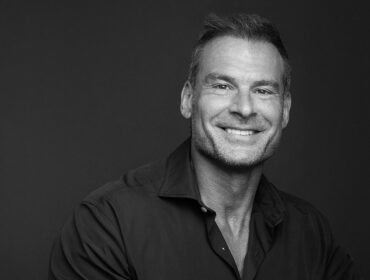
Nick Mitchell: Under The Skin
Updated 21 September 2026. Nick Mitchell stepped down as chief executive of Ultimate Performance in May 2024, when private equity firm Inflexion invested in the business. The interview below was published in July 2024; the introduction and the section on what he is doing now have been updated. Nick Mitchell is a co-founder of Unfiltered.
Nick Mitchell founded Ultimate Performance in the City of London in 2009 and built it into an international personal training business that runs its own gyms and employs its trainers directly. By May 2024, when Inflexion invested, it had 24 sites and around 450 staff, including 350 personal trainers, with clients in the UK, the US, the Middle East, Asia and Australia.
From the outside, success can seem to come easy. But in that time those close to him have witnessed his relentless determination and seen the extraordinary lengths, and countless sacrifices, he has made to turn his dream into a reality.
But from where does his drive and desire come? Has he always believed that he could achieve anything on which he set his head and heart? And has he ever wavered from his conviction that taking the road less travelled is the surest path to success?
In an exclusive Unfiltered Under The Skin interview, editor-in-chief Joe Warner flew to Los Angeles to find out about Nick’s younger life, the experiences and role models that forged the man he became, the invaluable life lessons he learned from first building his body and then building a global business, and his hopes and fears for the future.
And with Nick’s unique perspective on health, fitness and obesity – given the tens of thousands of clients who have walked through U.P.’s doors and turned their lives around – their wide-ranging, no-holds-barred conversation also tackled some of the biggest issues affecting society today, including childhood obesity, the Health At Every Size movement, steroid use, cancel culture, victimhood, the impact of social media on mental health, and more.
What is Nick Mitchell doing now?
As of September 2026, Nick Mitchell has no executive role at Ultimate Performance. He stepped down as chief executive in May 2024, when private equity firm Inflexion invested in the business through its Enterprise Fund V. Terms were not disclosed.
Mitchell is a co-founder of Unfiltered, the health, longevity and performance publication, which launched the Longevity 100, a ranked investment power list of the global longevity industry, in May 2026.
Speaking to Unfiltered for the interview below, he described how his thinking about work had begun to change at 50:
“My perspective has changed just a little bit, to go, okay, what is it that I actually want to do, rather than just chasing growth, growing the business, chasing commercial success? … What projects do I want to work on? What aspect of my life is going to give me the most fulfilment?”
Is Nick Mitchell still involved with Ultimate Performance?
Not in an executive capacity. He no longer runs the business and is not named among its leadership on Inflexion’s portfolio page. Ultimate Performance’s own website continues to describe him as its founder.
Ultimate Performance: key facts
Founded 2009, City of London. At the 2024 sale: 24 company-owned sites across eight countries on four continents and, according to Mitchell, more than 500 personal trainers employed directly. Never franchised; never raised outside capital. Private equity firm Inflexion invested in May 2024 (Enterprise Fund V; terms not disclosed). Nick Mitchell stepped down as CEO. Inflexion now lists 27 facilities.
This interview was recorded in Los Angeles by Joe Warner and first published in July 2024. The figures and roles Nick Mitchell describes reflect Ultimate Performance at the time; for his position now, see above. The transcript has been edited for length and clarity.
You must pinch yourself. Look at where you started, the first time I met you: a basement gym in the City, one facility. How many trainers? You were training pretty much full time.
When you first met me, 2010, maybe ten trainers. Now we have 550 people all over the world in the business, not just as trainers.
But this is beyond anything you could have possibly imagined, right?
No. It’s not.
Why not?
I’ve got big, big expectations on myself. And I always change the goalposts. I’ve told you this before. I changed the goalposts so often on myself that nothing I have ever done, genuinely, nothing, feels like a big deal. There are milestones. Opening the first gym was a big milestone. Opening the first gym abroad, in Hong Kong, was a big milestone. The very first book that we did together, The 12-Week Body Plan, that was an absolutely enormous buzz, because all my life I’d wanted to write a book. Every time I come close to hitting a goal, I change the goalposts.
Is there ever any time for a moment of reflection, to savour that moment? Or do you not allow yourself to get to that point before you’ve already redefined what the objective is?
I don’t let myself get to that point, but it’s not conscious. And I realise that I probably should. I certainly should. You should always take time to smell the roses, and I do my best to sometimes appreciate the fruits of my labours. The reason I’m getting a different perspective, though, is age related. I’m 50 years old. The clock is ticking for me now, and because the clock is ticking for me now, my perspective — and this is a very, very recent thing with me — my perspective has changed just a little bit, to go, okay, what is it that I actually want to do, rather than just chasing growth, growing the business, chasing commercial success? It’s never been about chasing money. Rather than doing that, do I take a different view? What projects do I want to work on? What aspect of my life is going to give me the most fulfilment? For instance, spending a significant amount of time engaged with my kids. That’s the most important thing for me.
You know the worst thing for me? I had a realisation very recently. I was spending a Sunday with the children, with the family. And the truth of the matter is I wasn’t there. I was physically there, but I was not emotionally or mentally present.
So how do you redress that balance? How do you become mentally there as well as physically?
Compartmentalise. You compartmentalise it.
You make that sound incredibly easy.
It’s incredibly hard.
Are you a good boss?
Some people would say yes, and some people would say no. Some people would say fantastic and some people would say terrible.
Are you aware of the pressure and the demands that it might place on someone working for Nick Mitchell?
Yes, I am. I have an intimidating character for them. I have an intimidating physical presence to a lot of them. I don’t work well with everyone. I will tell anyone that comes to work for me: if you can’t take constructive, well-meaning criticism, we’re not going to work. I don’t work well with excuse makers, but no one should work well with excuse makers, right?
If you send me an email and you spell independent with an A at the end, I’m going to correct you. Now, if I say, you blithering fool, look at this stupid spelling mistake — but I don’t. I would go, you know, don’t mean to nitpick. If I make a mistake, I want someone to tell me. The people that have worked with me the longest, if I make a mistake, they feel comfortable telling me. People don’t get that about me. It’s just about standards. I want my business to be the best in the world at what it does. In order to do that, you’ve got to take the road less travelled.
The last time I got you in a pub, you said you weren’t proud of yourself for what you’d built with Ultimate Performance — though you were proud of the careers and opportunities you’d given people, and of seeing staff rise from very junior to senior global positions. I’m really interested in why you don’t feel proud of yourself, and where that comes from.
It could always be better. By that spin, you could say it’s not good enough. But I’m not sat there thinking, you loser. So it’s not that.
How much of that mindset comes from growing up? I know from conversations we’ve had that if you got 99 out of 100 in a test, your dad would say, why didn’t you get 100? Is there a memorable moment where your dad did give you praise?
I didn’t live for praise from anyone else. If I’d lived for praise from my parents — and I don’t mean this the way it sounds — I’d still be waiting. So my life has not been about seeking praise. Okay, maybe it has, but it’s only been about seeking praise from myself. What can I do to make myself proud? What can I do to feel, you know, you’ve contributed, you’ve done something worthy, you’ve lived up to your potential?
I didn’t get praise, but I didn’t get broken down either. What I got from every single person around me growing up was: Nicholas, if you work hard, you can do anything that you want. My dad had his own small but successful business. I was taught you’re never too important to pick up the shit. And I was always told — and my school taught me this as well, I was at the same school for ten years — if you set your mind to it, you can achieve whatever you want to achieve in life.
When you set up the business, what was the advice your dad gave you?
Oh, don’t do it. My dad is cautious. My dad’s way of showing love is to look at the worst-case scenario. My father has opposed every meaningful decision in my life of greater significance than buying a mid-priced, mid-sized car. No exaggeration. And same with my brother.
Didn’t he say, when you had the idea to start Ultimate Performance, that no one makes any money from lifting weights?
My dad said that to me long before that. “No one ever makes money from weight training, lad.” I did not tell them when I was becoming a personal trainer, because they would have said, why do you want to do that? That’s not a proper career. All valid, by the way. All valid. It doesn’t have social cachet, prestige, compared to being a lawyer or a banker. All this money going on my education, and they’d go, what’s the point of it? So I kept it quiet until I was in Men’s Health the first time. It was a four- or five-page feature. And my dad’s comment was, well, you know, Richard Branson would have got himself more in that, wouldn’t he? He’s not wrong.
So what are they saying now?
They say they’re very proud. But if I have a business discussion with my dad, anything I say, he’ll take the opposing view. I’m going to sell: oh, what do you want to sell for? I’m not going to sell: you should be selling, cashing out.
You’ve definitely mellowed over the ten years I’ve known you.
It’s called declining testosterone levels.
Where did that spark, that passion for lifting weights, come from?
My dad, when I was 12 years old, came back from a business trip in America with a magazine that had Arnold Schwarzenegger on the front as Conan the Destroyer, holding a sword. I took one look at it, and I thought, that’s what I want to look like. I was bitten from there. I then bought Arnold’s autobiography, Arnold: The Education of a Bodybuilder, and took it to school, which was a big mistake, because my school was massive, 1,200 boys, only boys, so it was Lord of the Flies. My nickname was Arnie until I was 18. I trained at home for a little bit, and as soon as I was 14, old enough to go to a local gym, I went to a gym in a small town called Ilkley. After about a year it changed hands, and the woman who took it over kicked me out for training too hard. I kid you not.
What did that look like? Making too much noise, throwing weights around?
Training too hard. I wasn’t making noise. I was training hard. I wasn’t shouting and screaming. I was 14, 15, in a small gym. So when I was 16, [a friend] and I started to go to a gym called Phoenix in Bradford, which was a proper hard bodybuilding gym, and everything went from there.
Were you not intimidated, as a young man walking into that environment?
No, I don’t remember being so. And we were really different, because we went to Bradford Grammar. We went to the posh school, and this was not a posh place at all. When I first went to Muscle Works in London, I walked in and saw a couple of guys getting ready for the British Championships, looking very, very lean, very big and very mean. And I walked around the corner of the old gym, and there were these dumbbells that went up to 180 pounds. I couldn’t lift them, obviously, but I wanted to, and I thought, okay, I’m home. This is where I need to be.
A lot of people who’ve had success in bodybuilding admit they got into it because of insecurity. Was that a motivation for you?
Not at all. I wanted to be Arnold. I was 12. I saw Arnold, and I thought, that’s what I want to look like. I bought bodybuilding books. I would go to the local market in Skipton, buy second-hand magazines from the 70s, and pretend they were from my dad because I was embarrassed. By the time I was 14, I was six foot one, and I was lanky. My brother would call me giraffe, and I would chase him around the house. Lanky hurt as a word to me until well into my 20s — and in my 20s I’m 280 to 320 pounds and still lanky hurts.
Did you want to be a professional bodybuilder?
Yeah. I wanted Mr Olympia. I want to be the best.
So at which point did you realise that wasn’t going to happen?
Competing, and realising that what I had to do in order to be as good as I could be, I still would not be as good as I wanted to be.
For what reason?
Genetics. It’s a beauty contest. It’s how you’re put together. You are born a professional bodybuilder. You do not become a professional bodybuilder. You’ve got to put the work in, and I was born to put the work in. But from a beauty-contest perspective, I’m six foot three. Bodybuilders are very, very, very rarely six foot three.
It was a steady and fast realisation, from looking at my pictures from contests and seeing just what I looked like dieted down. I’ve got the genetics to put muscle on. But it just doesn’t flow. I was told by someone that knows that with a handful of years more of very hard work, I could maybe become top three in the British heavyweight championships. I think that’s probably true, but I couldn’t have gone any further, no matter what, because I’m just not put together that way.
When did you first become aware of steroids?
Probably at 14 or 15. And my goal at 14 or 15 was to become the first steroid-free Mr Olympia. The wishful thinking and naivety of a young teen, right. The magazines would say things like, they’re going to kill you, they don’t work. Then eventually the magazines started saying, actually they do work, but they’re going to kill you. And then it changed to, well, they work, and they’re not that good for you, but they’re not going to kill you. Now things have changed, because now they do kill people, because people take so much. You see a ton of guys my age, older or younger, who can’t let it go when they need to let it go. They can’t stop juicing. And then in their 40s and 50s they’ve got real problems.
There are a number of people you and I both know who have died at a relatively young age because of heart-related issues. Is this part of the problem, that they cannot accept not being that guy?
Yes, of course it is, because the steroids make you feel like Superman. Who doesn’t want to feel like Superman?
How can some people walk away and others can’t?
Mentally strong. Having more to you. Dorian Yates was the ultimate robot. Six-time Mr Olympia. Dorian had a few crises in his post-bodybuilding days, partying, this, that and the other, and then he’s had to find his version of spirituality. Of course he wants to be lean and healthy, but this guy couldn’t give two shits about the size of his muscles. There are a lot of guys of Dorian’s era, successful or unsuccessful, who can’t let go the way Dorian has let it go. You’ve got to replace it with something.
A lot of young guys are using steroids recreationally, alongside other drugs, alongside booze, just because they want to look a little bit better. What are they doing to themselves?
They’re putting themselves on a rollercoaster. I am opposed to everyone taking steroids. Not because I think relatively small doses of steroids will kill you, but for two main reasons. One reason is I don’t trust the authenticity of what most people can get. In America you can get it from your doctor, so you can discount that. But in the UK I don’t trust it. Bathtub drugs, literally brewed up in a bathtub half the time.
The issue that I’ve seen is how it changes people’s personalities, especially insecure young men, because they go from being insecure, maybe a little bit lower in testosterone naturally, to all of a sudden, boom, they think they’re Superman, because they can chew iron and spit nails. The way they react around women — I’ve seen them go from being the politest of guys to being handsy in the extreme. Aggressive. They think they’re Superman. They become delusional. And then when they stop, if you’ve got this little man inside you, they get depressed. You can see them crying in the corner of a room. A big guy, crying in the corner of a room, because he’s off his steroids. And all they do is go, I can’t wait to get back on.
If you need it to compete in your sport, that’s your decision, between you and your conscience, and you and your coach, and you and the rules. People go, oh, bodybuilding is cheating. It’s not cheating, because they all do it. But it’s not for me. It’s just not worth it.
So what’s your advice for a young guy watching this who’s thinking about it?
You don’t need it to build a good physique. If your aspiration is Arnold, suck it up: you need it. But look at pictures of Reg Park from the early 60s. This guy was massive. The silver-era, bronze-era bodybuilders — some of these guys looked amazing. Gymnasts look amazing even now. So you can build that physique, but it doesn’t come fast. Whereas the steroid gains come fast and go fast.
How worried are you about what exposure to social media is doing to your children — their self-esteem, their sense of where they belong in the world?
Specifically, I would not allow them to have TikTok. No chance. There’s a YouTube channel that has an extremely interesting documentary on TikTok. The algorithm for TikTok in China, it serves STEM, it serves science, it serves education stuff. The algorithm in the US or the West for TikTok is utter poison.
Are you worried about the algorithm or the ownership?
The algorithm. Because of the ownership, right. So it’s poison. I also think that social media in general is poison for children, for everybody. But children have more malleable minds.
Especially with your daughter, as social media plays a bigger part in her life — when she’s seeing celebrities who are having work done?
It’s more insidious than that. It’s their friends who will post up pictures with filters. There’s a video filter now — I can’t remember what it’s called. It doesn’t change men as much as it changes women, and the way it changes women is absolutely mind-blowing. It’s a simple filter that anyone can apply. Your lips get plumped up, your skin gets smoothed out, your nose gets smaller, your forehead gets smaller. Your hair becomes a bit more lustrous. The eyes get larger, the whites of the eyes whiter. You look like your glamorous twin sister that never existed. And then you look at your reality, your real self, and you look ugly in comparison. This is dangerous for everybody.
I make it very, very clear that comparison is the thief of joy. I’ll tell them this. We used to have an expression, keeping up with the Joneses. People are sent mad by their neighbours. Well, now we can be sent mad by a million different people all over the planet.
How much do you blame the influencers and influencer culture for the world we now live in?
I don’t blame the influencers at all. The influencers are just a symptom of it. We have allowed — and I don’t think we had a choice — immense power and wealth to accumulate in Mark Zuckerberg’s hands, and in the hands of the people that control social media. Social media companies have a responsibility, but they don’t want to take on that responsibility. They’ll do everything they can to fight it.
I’m not a fan of social media. I think it is a cancer. Even I, if I go on my Instagram feed, it’s when I’m being a bit listless, aimless. I only do it at night. Everyone’s asleep, I don’t want to go to bed yet, and I go through my feed a little bit, and I feel bad. I don’t feel good doing it.
What’s your take on what should be done to address the underlying causes of obesity, so we can actually help people who want to lose weight and live longer?
Well, the first thing to say is no one should be shamed for being obese. No one should be told you are a loser, you are a failure, you are nothing. If someone has a drug issue, we don’t tell them they’re a failure and a loser. We don’t try to break them down. We give them help. The exact same thing should be done with obesity. Obesity is extremely complicated, because it’s about the food that we eat and the lifestyle that we live.
Many, many people who are obese are addicted physiologically to having a full stomach. This is a fact. Something that’s not talked about very often. So if you are physiologically addicted to having a full stomach, you need help. You don’t need condemnation.
But here’s the thing that frustrates me and frustrates a lot of the fitness industry, who are practically helping people day in and day out. I’ve seen thousands of obese people sort it out, and I’ve seen tens of thousands of overweight people sort it out. The worse the problem, the more obese they are, the more they need that cold jug of water thrown in their face. Very often, when they come and work with us, they’ve done it to themselves already. They’ve had that wake-up call. They can’t play with the kids. They can’t climb the stairs. I have never met anyone who is comfortable in their own skin and obese who can fix it. You’ve got to have a recognition and a realisation: this is going to kill me. There’s this movement in the UK, Health at Every Size. No, you can’t be healthy at every size.
So how dangerous is the body positivity movement?
It’s extremely dangerous, because you don’t want to give people an excuse. You’ve got to go: you’re not a bad person. You have intrinsic worth. Your intrinsic value is not tied up in what your body looks like. But if you are obese, it increases your chances of all-cause mortality. All-cause mortality means anything and everything that can kill you. There’s a greater chance of it killing you if you’re obese.
If you’re reading this, you are among the first people to discover Unfiltered. It means you’re ahead of the game. And it means you are with us from the start of our journey as we guide you through the greatest era of health and wellness innovation the world has ever known. A journey we’re now on together, because we want our community of users to have their say and help us shape our editorial agenda. So thank you for joining us, for being inquisitive and for being someone who can say “I was there from the very beginning”.
Joe Warner, Editor-in-Chief, Unfiltered

